Feedstock portfolio

Bio Refinery Crops.

Bio refinery crops are not single-product crops — they are designed for fractionation. Each tonne unlocks cellulose, hemicellulose, lignin, sugars, proteins and nutrients, powering the 6F value ladder: Food, Feed, Fuel, Fertility, Fiber and Functional materials.

Napier (Hybrid Bajra-Napier)

The flagship perennial — 200–400 t/ha/yr of biomass, ratoonable for 4–6 years. Source of cellulose, hemicellulose, lignin, CBG, fodder and digestate fertilizer.

Sweet Sorghum

Grain for food, juice for ethanol and bio-CO₂, bagasse for fiber and CBG. A 4-month rainfed crop with proven Deccan agronomy.

Maize (Whole Plant)

Cob for food and feed; stover and silage for the biorefinery. The widely-adopted bridge crop into cluster-scale feedstock supply.

Bamboo

Fast-growing perennial fiber crop — building materials, biochar, activated carbon, packaging, and high-grade cellulose for textiles and bio-composites.

Sugarcane & Energy Cane

Sugar, ethanol, bagasse-based power and cellulosic streams — already integrated into India's industrial biorefinery base.

Moringa & Agro-forestry

Nutrient-dense leaves for food and feed, seed cake for bio-fertilizer, oil for nutraceuticals, and biomass for the refinery loop.

Pulses & Oilseeds (Rotation)

Nitrogen-fixing legumes and oilseeds rotated into the cluster — protein streams, edible oils, and de-oiled cake feeding the bio-input economy.

Algae & Aquatic Crops

Next-generation feedstock for proteins, omega-3, bio-CO₂ uptake, and high-value molecules — closing the carbon loop with biorefinery off-gases.

6F
Food · Feed · Fuel · Fertility · Fiber · Functional
200–400 t
Napier yield / ha / yr
25 km
Cluster radius
Zero
Liquid discharge
DAL — End-to-end farmer support

From nursery to assured income.

A six-step support stack delivered through DAL to every FPO / FPC that signs an EOI — covering planting material, finance, agronomy, harvesting, and price-hedged offtake.

01

DAL Franchised Nurseries Across India

A pan-India network of DAL-franchised nurseries — quality-certified, agro-climatically zoned, and located within reach of every FPO cluster. Standardised mother-plant protocols, traceable batches, and uniform planting material from Punjab to Tamil Nadu.

02

Supply of Seedlings & Planting Material

Assured supply of Hybrid Bajra-Napier rooted slips, sweet sorghum seed, maize hybrids, bamboo saplings and agro-forestry stock — delivered to the FPO doorstep with optimum moisture packing (gunny bag, ventilated carton, or double-layer for long-distance transport) for >90% field survival.

03

FPO / FPC Funding Support

Hand-holding for credit linkages — NABARD equity grants, IFFCO/SFAC matching contributions, term loans for harvesters and drip systems, and working-capital tie-ups with cooperative banks. DAL co-signs the project DPR and accompanies the FPO through sanction.

04

Agronomy & Extension Support

Season-long agronomy advisory — land prep, spacing, fertigation, IPM, ratoon management, silage curing. Field officers visit each cluster, and digital crop calendars are pushed to Silage Mitras in regional languages.

05

Mechanised Harvesting

Shared-services harvester pool, choppers, balers and silage trucks deployed against the FPO's seasonal plan. Quality-graded at farmgate, transported in covered vehicles, and delivered to the biorefinery within the recommended freshness window.

06

Yields, Income & Hedges (post-EOI)

Once the FPO/FPC signs an EOI with DAL, farmers receive an indicative yield band, transparent price discovery, pre-agreed floor pricing with indexation, 100% off-take, and crop & weather insurance — converting biomass cultivation into a hedged, multi-year cash flow.

Napier · Lignin spotlight

The largest per-acre producer of lignin on Earth.

Napier delivers its first harvest in 120 days, and then every 120 days for 7+ years from the same root stock — no replanting, no tillage, no fallow. Each cut is a multi-tonne stream of cellulose, hemicellulose and the highest per-acre yield of lignin of any cultivated crop in India.

Lignin is the building block of bio-polymers, bio-plastics, bio-adhesives, carbon fibre and bio-bitumen. India today imports almost all of it. With a Napier-anchored biorefinery network, India can become self-reliant in biopolymers within 15 years — and redirect the avoided import bill of USD 130 Bn per year straight into rural farmer incomes, with first revenue flowing in 2–3 years and full scale in 10–15.
120 days
From planting to first harvest
Every 120 days
Repeat cuts for 7+ years on same root
USD 130 Bn / yr
Biopolymer imports avoided → farmer income
15 years
To biopolymer self-reliance — starting in 2–3
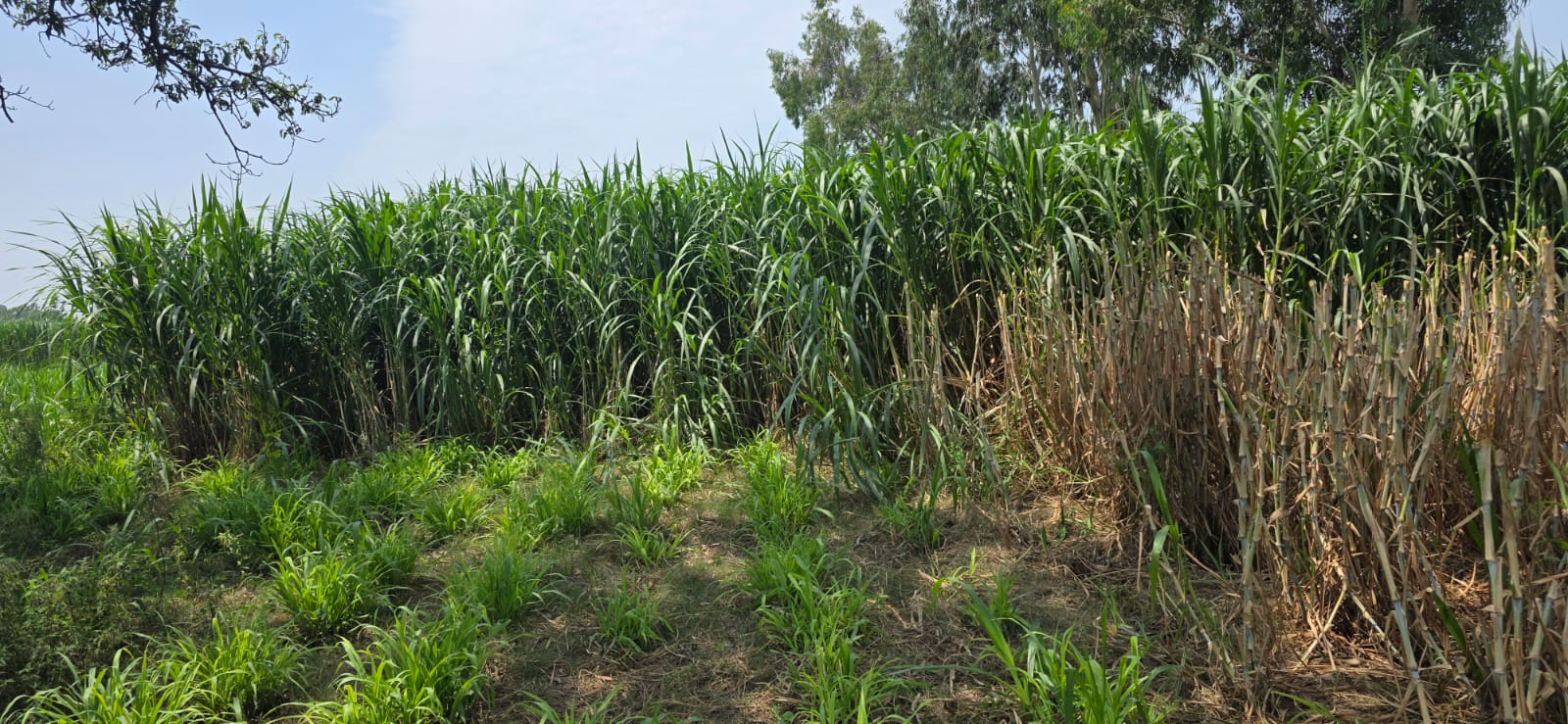
DAL team at a Napier and sugarcane field
On-ground with growers — Napier alongside sugarcane in Uttar Pradesh.
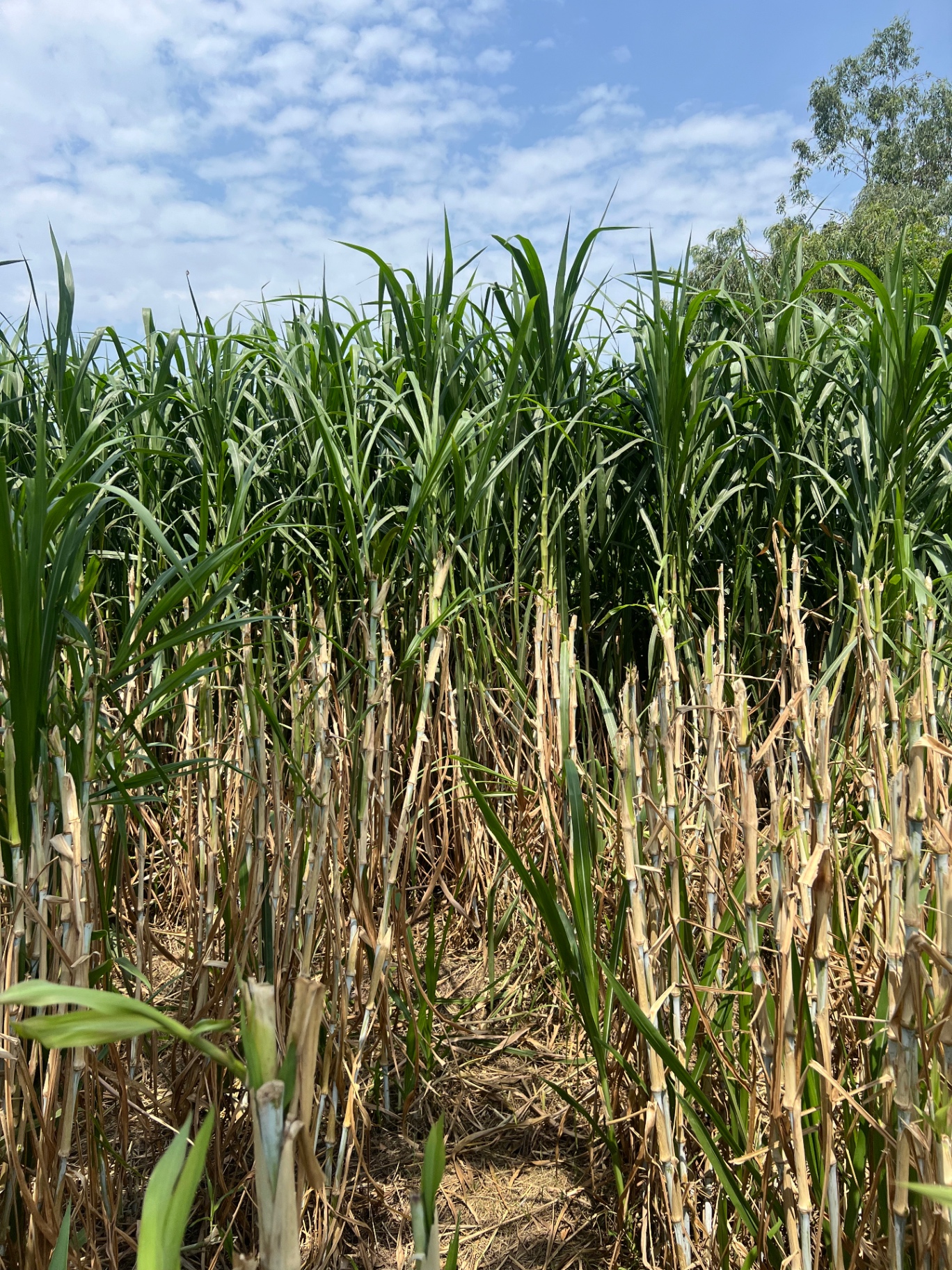
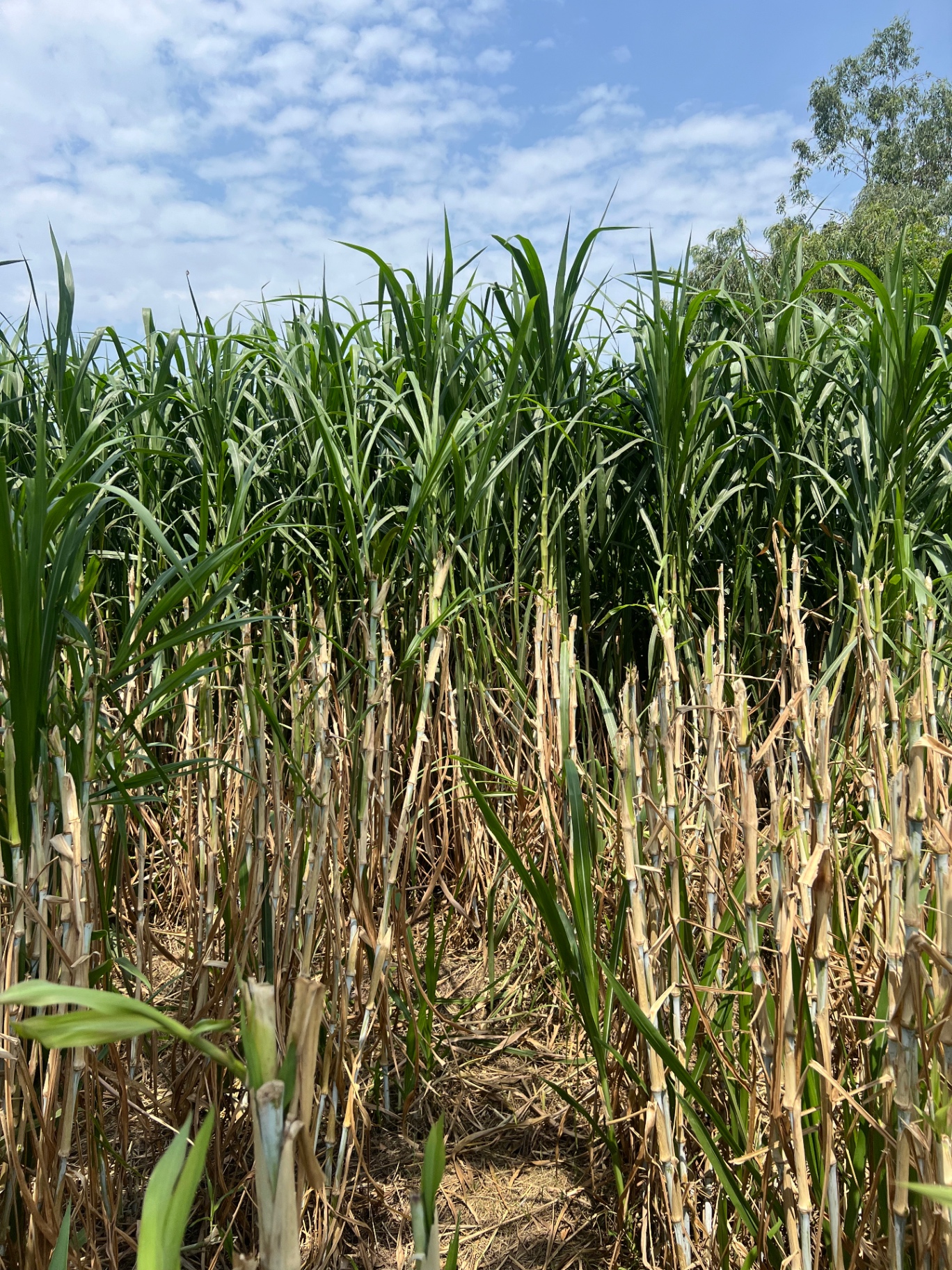
Mature Napier canopy beside sugarcane
120-day Napier canopy — denser biomass than adjacent sugarcane.
Person standing beside towering Napier stand for height scale
Height at harvest — multi-metre stalks ready for fractionation.
Close-up of a freshly cut Napier stalk
Lignin-rich stalk — feedstock for bio-polymers, fibre and CBG.
Field walkthrough — Napier biorefinery feedstock in cultivation.
Extended walkthrough — full pass across the Napier energy crop block.
Amar field walkthrough — grower-led tour of a mature Napier stand.
Napier energy crop field — canopy density and row spacing (2).
Napier energy crop field — stand uniformity and height (3).
Napier energy crop field — pre-harvest readiness (4).
Napier energy crop field — mid-block traverse (5).
Napier energy crop field — extended panoramic pass (6).
Site visit walkthrough — team pass across the Napier biorefinery feedstock block.
Site visit by the team

Napier varieties & agronomics — seen, walked, verified.

A direct read from the field: multiple Napier varieties, growth stages and irrigation regimes captured during DAL's on-site walkthroughs. From young tillers establishing on freshly prepared beds to towering 12-foot stands at harvest, these are the agronomic realities behind every tonne of biorefinery feedstock.
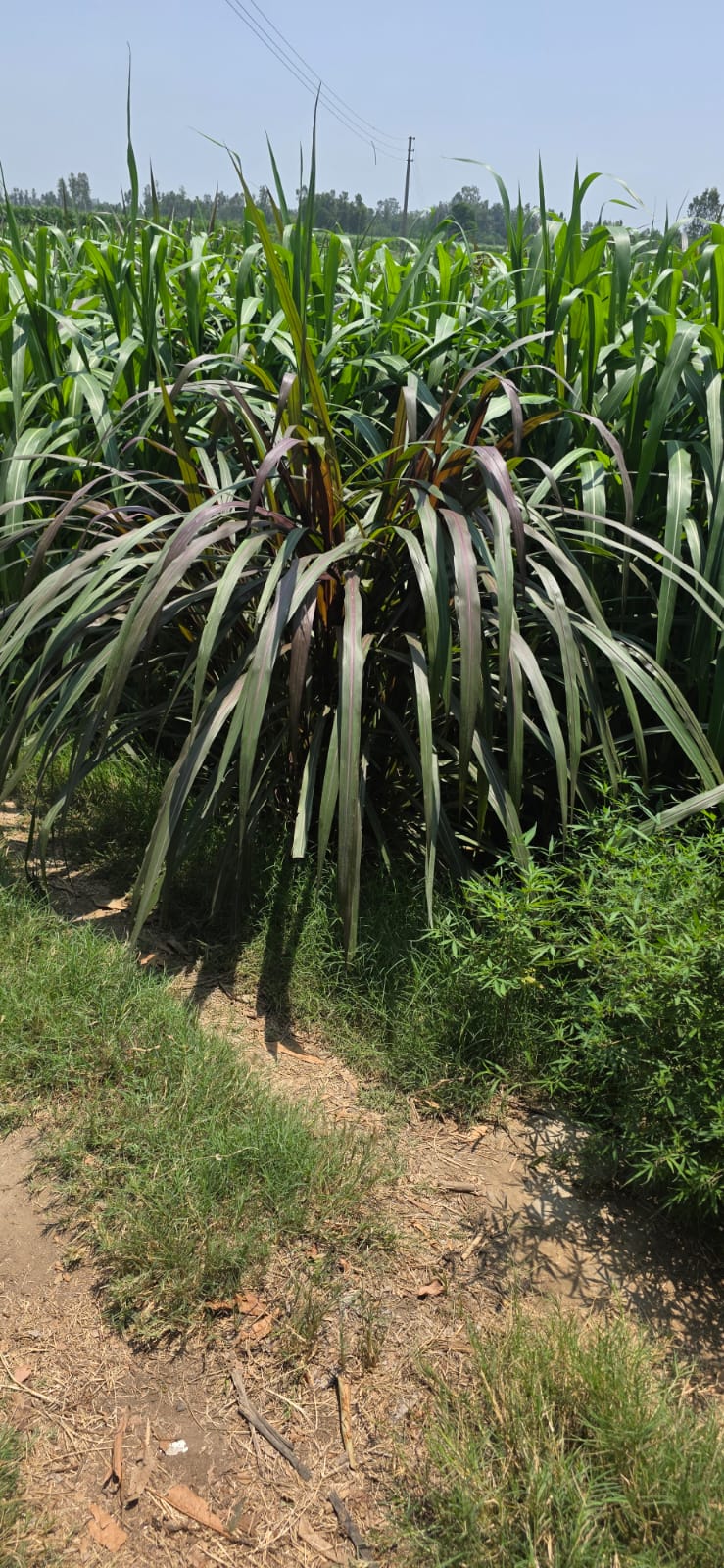
Purple-leaf Napier variety in foreground beside a green Napier stand
Purple-leaf Napier variety — distinctive pigmentation, comparable biomass and lignin yield to the green hybrid alongside.
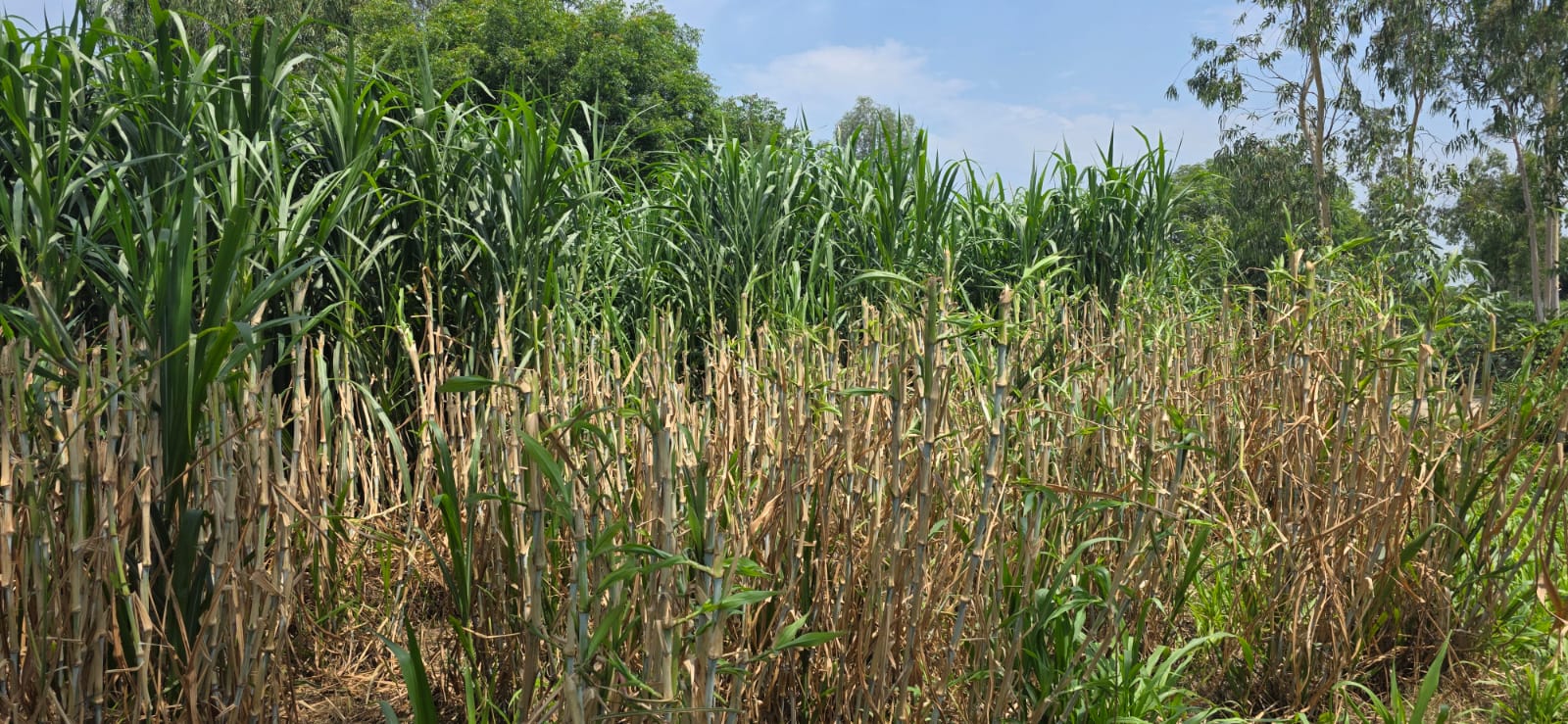
Mature post-harvest Napier stand showing thick stalks and regrowth
Mature stand mid-cycle — thick blue-green stalks with active regrowth flushing from the stool.
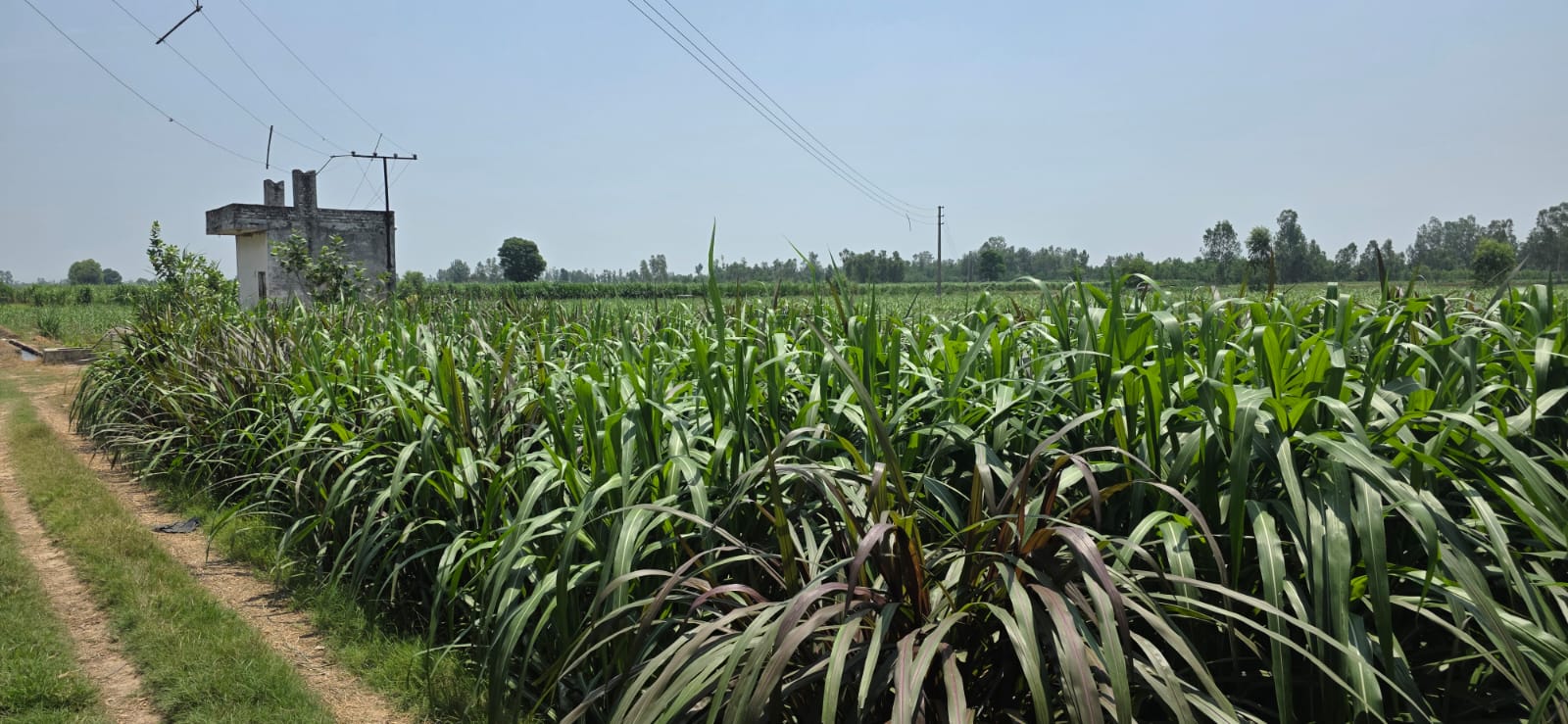
Panoramic Napier field with electrical transformer in background
Field panorama — multi-acre Napier block with on-site power infrastructure for irrigation and chaffing.
Hand holding a freshly cut Napier stalk in the field for quality check
Stalk-in-hand quality check — internode length, juiciness and rind hardness all read at the cut.
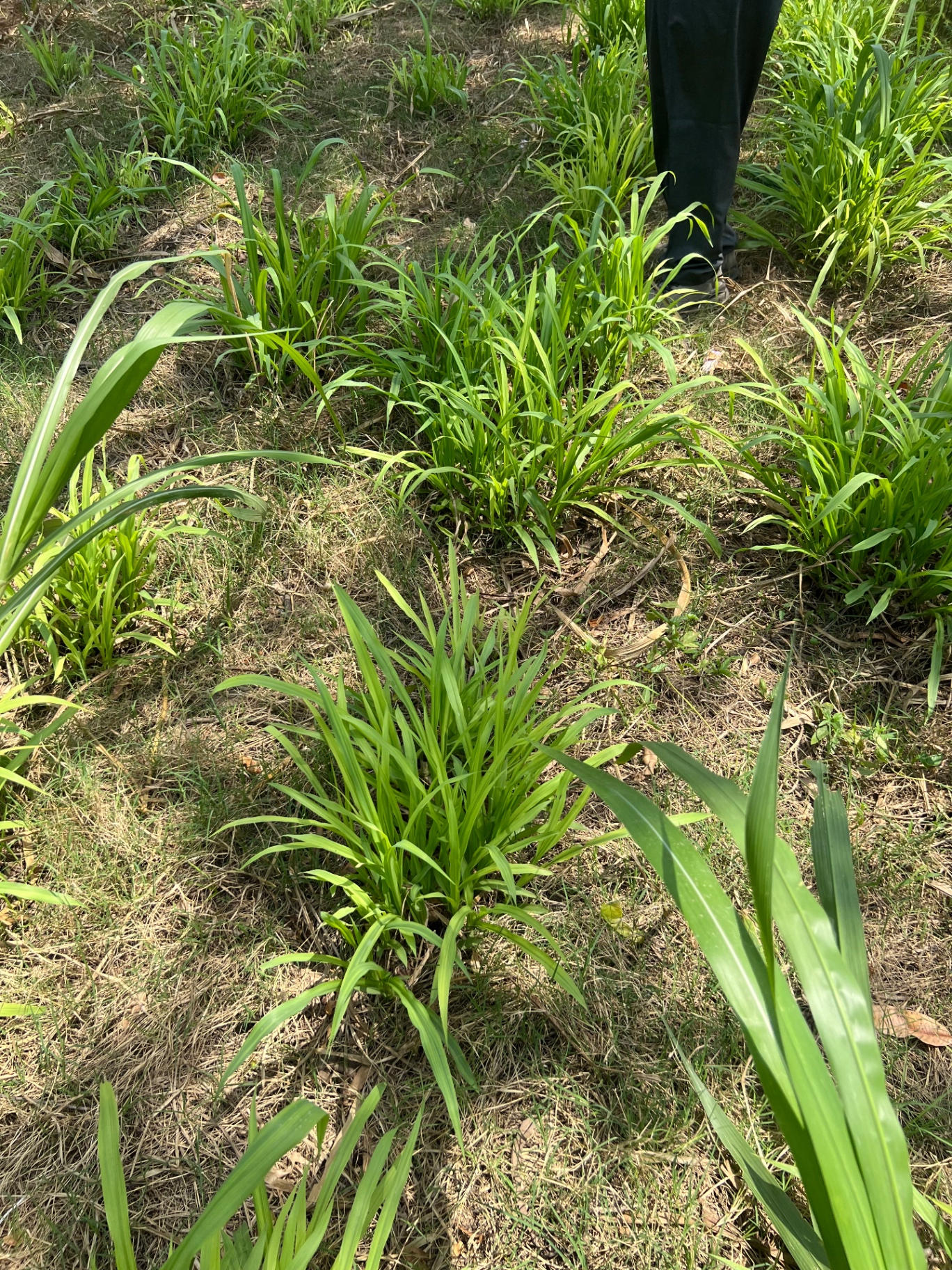
Young Napier tillers establishing on prepared ground beside a field officer's boots
Day-15 establishment — young tillers emerging from rooted slips, target population locked in early.
Towering Napier canopy against a partly cloudy sky
Pre-harvest canopy — multi-metre canes overtopping the frame; peak biomass window.
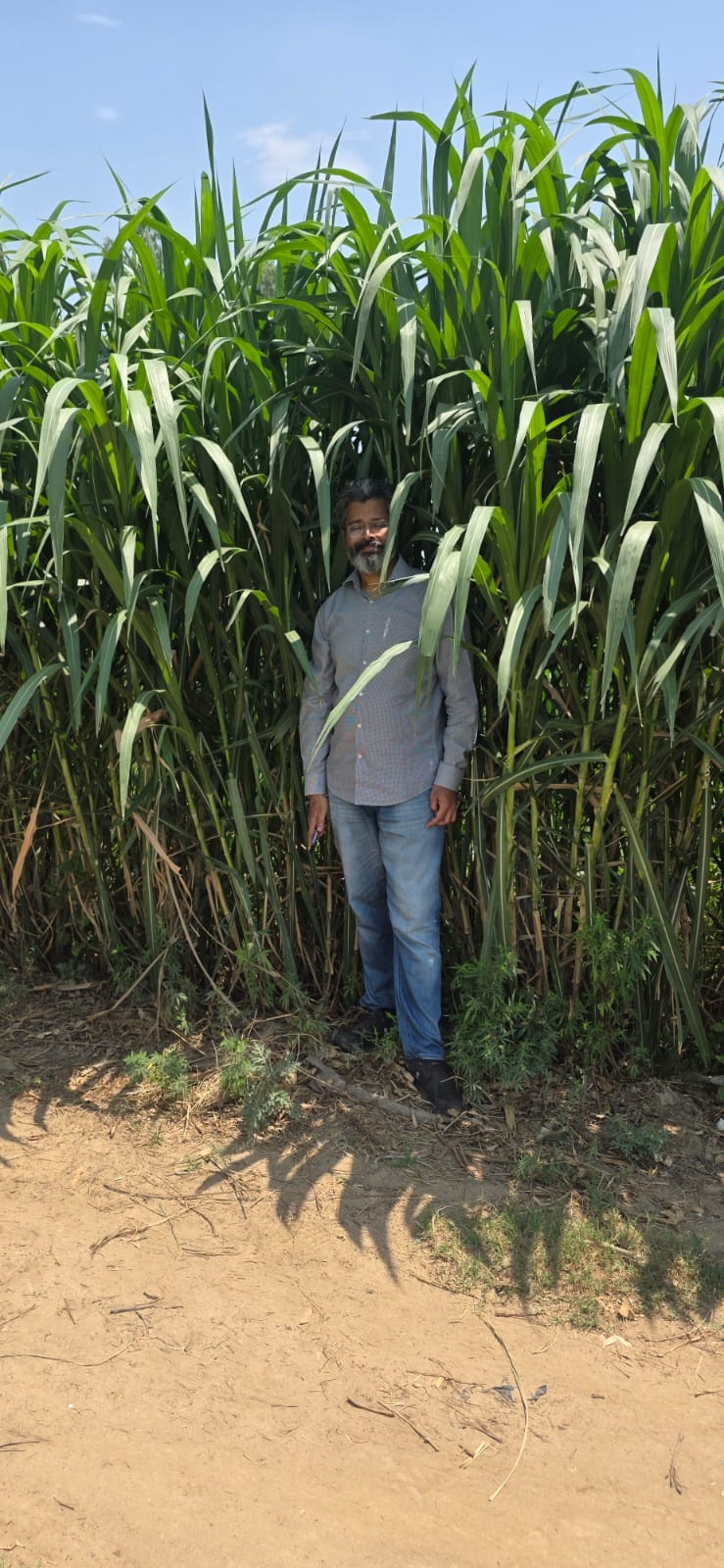
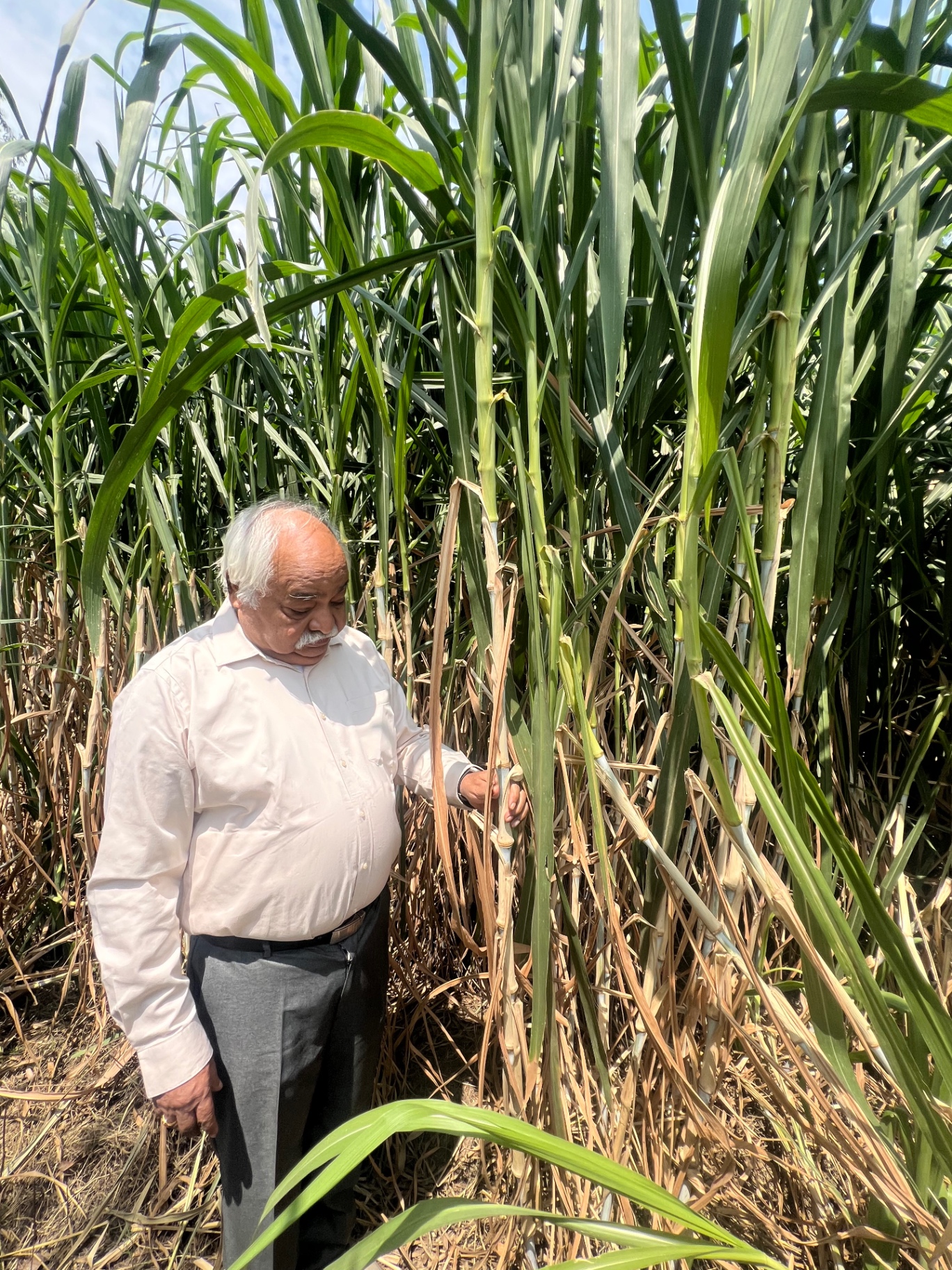
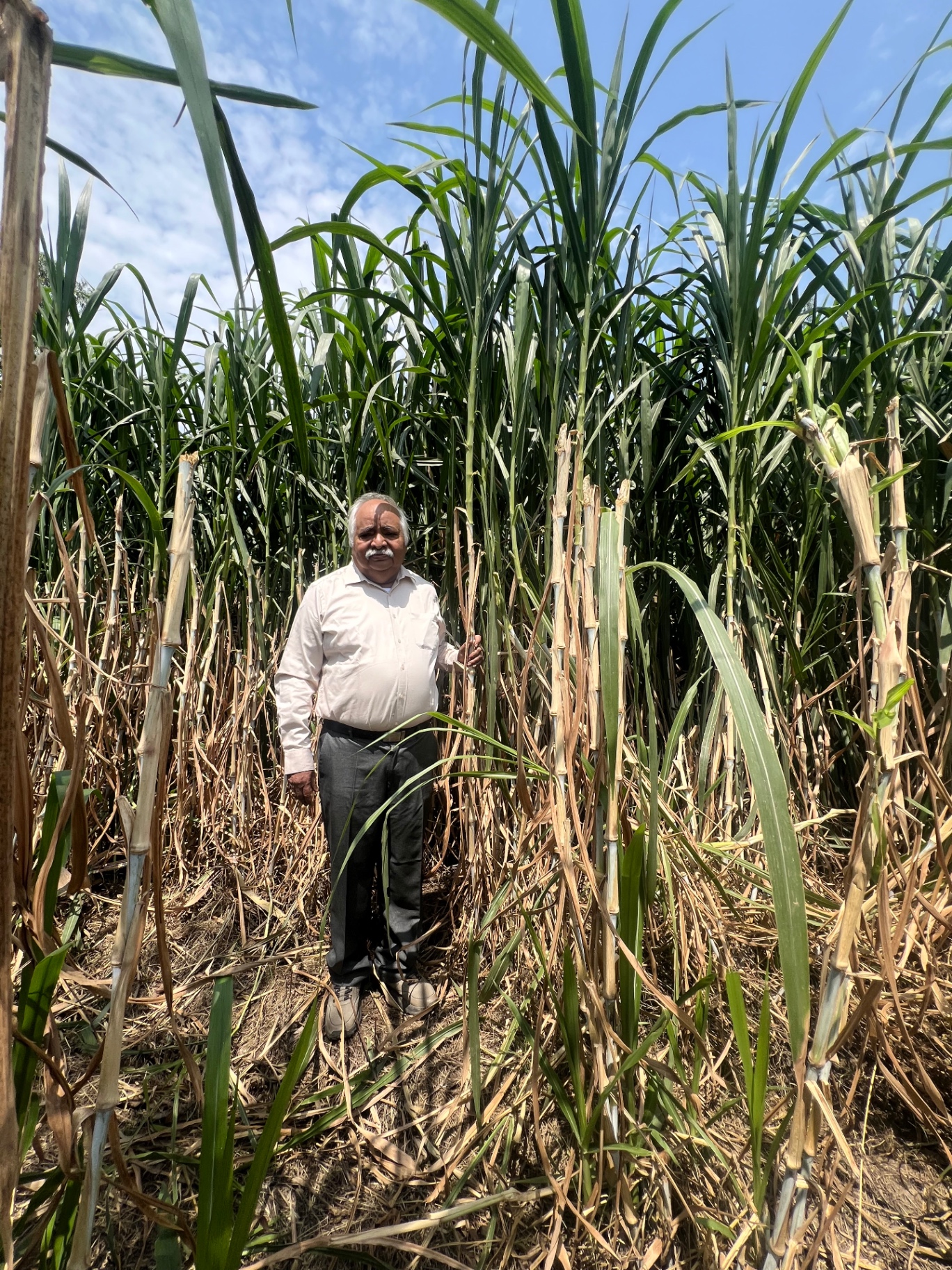
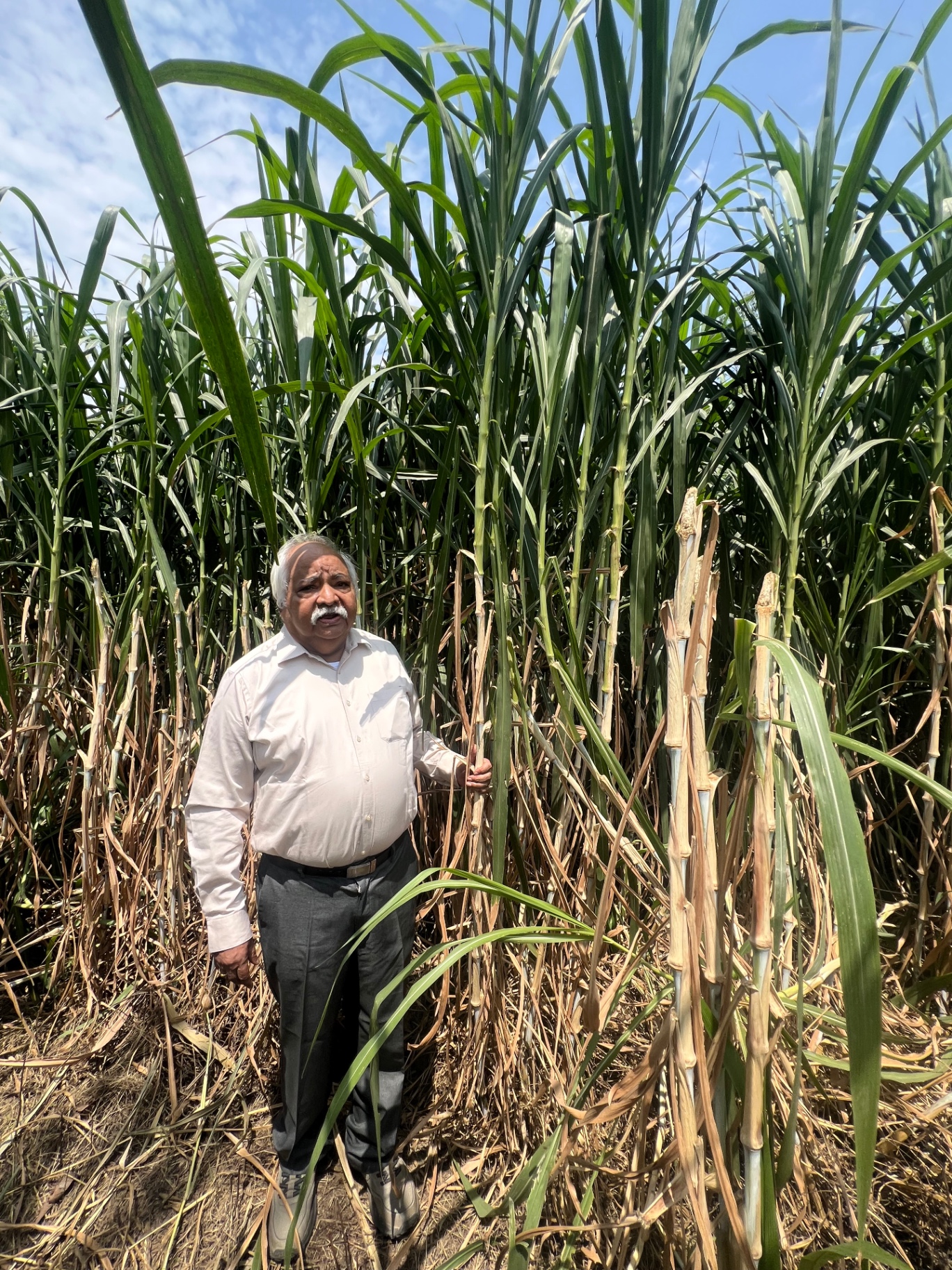
Mr. YV, Director Agropolis, standing beside a towering mature Napier stand reaching over 12 feet
Mr. YV, Director Agropolis, beside a 12-foot mature Napier block — scale visible only on the ground.
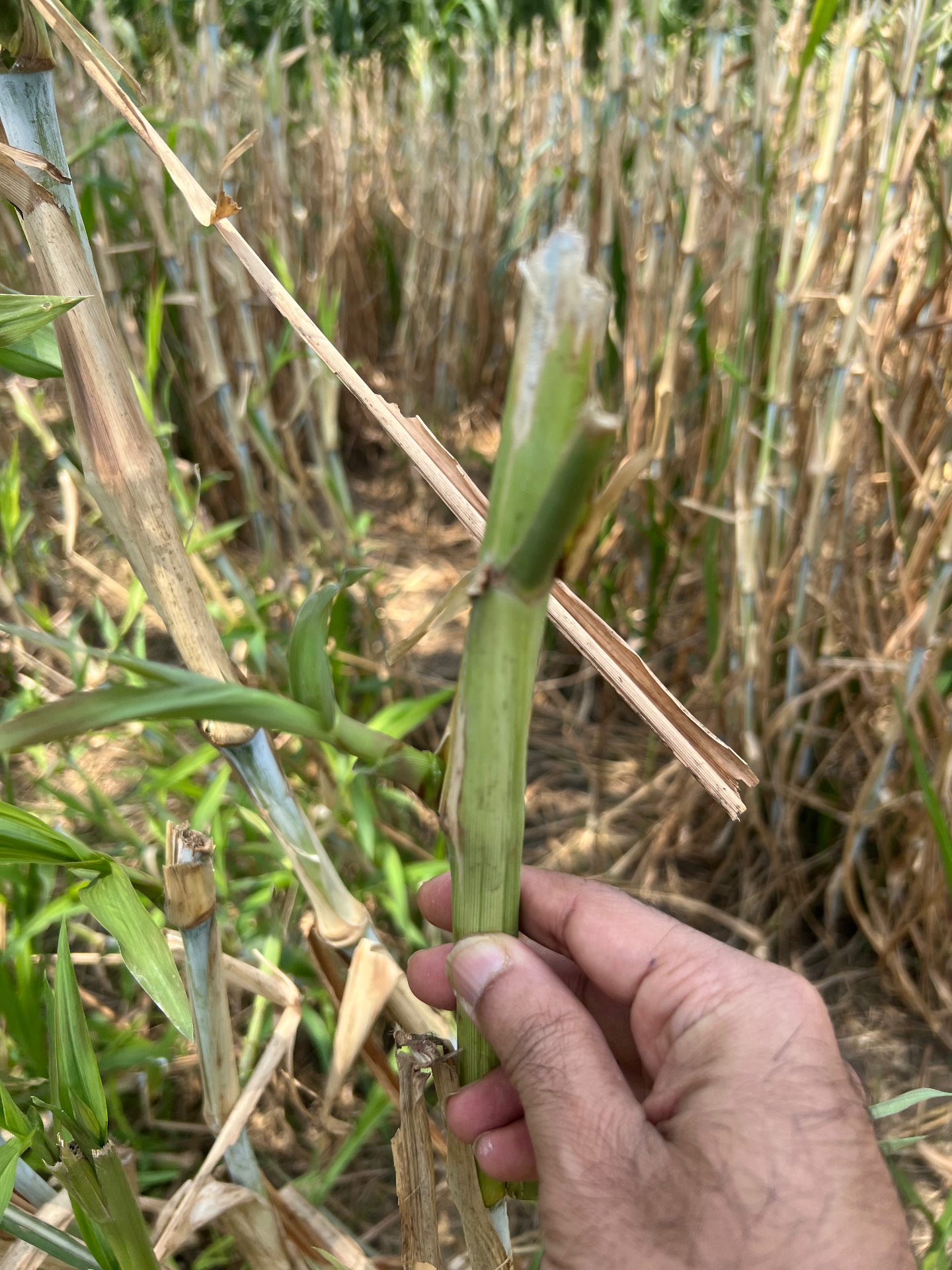
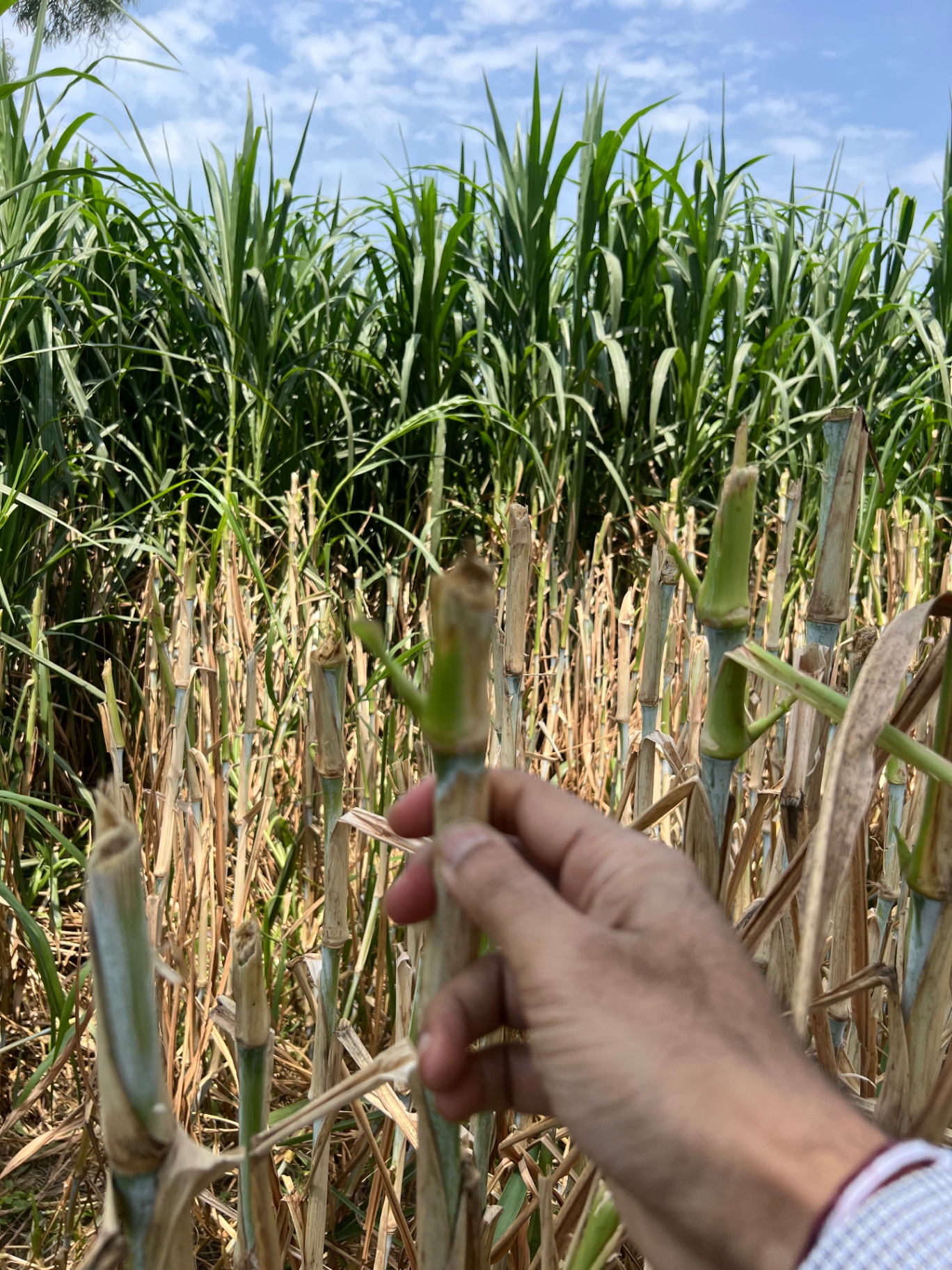
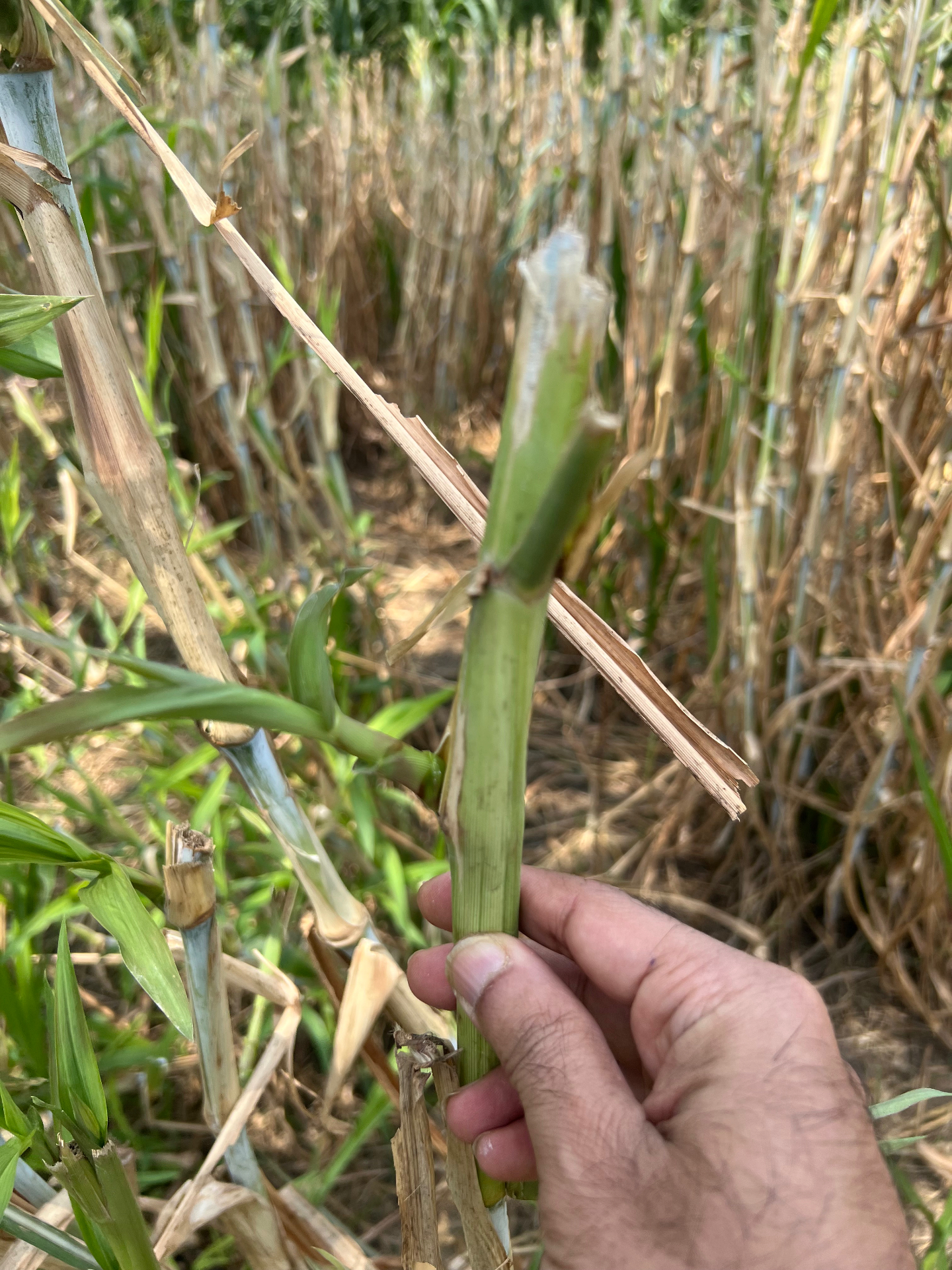
Hand holding a freshly cut Napier stalk with ratoon regrowth visible at the base
Post-harvest ratoon — fresh green flush emerging within days of the cut, the engine of multi-year yield from a single planting.
Mr. YV, Director Agropolis, standing within a towering Napier stand under open sky
Mr. YV, Director Agropolis, inside the mature Napier block — canes overtop the frame against open sky.
Mature Napier block panorama with green canopy against blue sky
Block panorama — mature canopy and stalks against the skyline, harvest-ready biorefinery feedstock.
Leadership profile
Mr. CSB — Bio

Download the full biographical profile (PDF).

Download CSB Bio (PDF)
Nodes propagation

A farmer doesn't only sell crop — he sells nodes that plant the next 10 million hectares.

Every mature Napier cane carries 15–25 viable nodes. Each node, cut and planted, becomes a new stool — and a new income stream. India needs 10 million hectares under Napier by 2035 to feed its bio-refinery economy. That scale is unreachable through nurseries alone; it has to be propagated farmer-to-farmer, node-by-node. The cultivator becomes a multiplier — selling biomass to the biorefinery and planting material to the next FPO cluster.
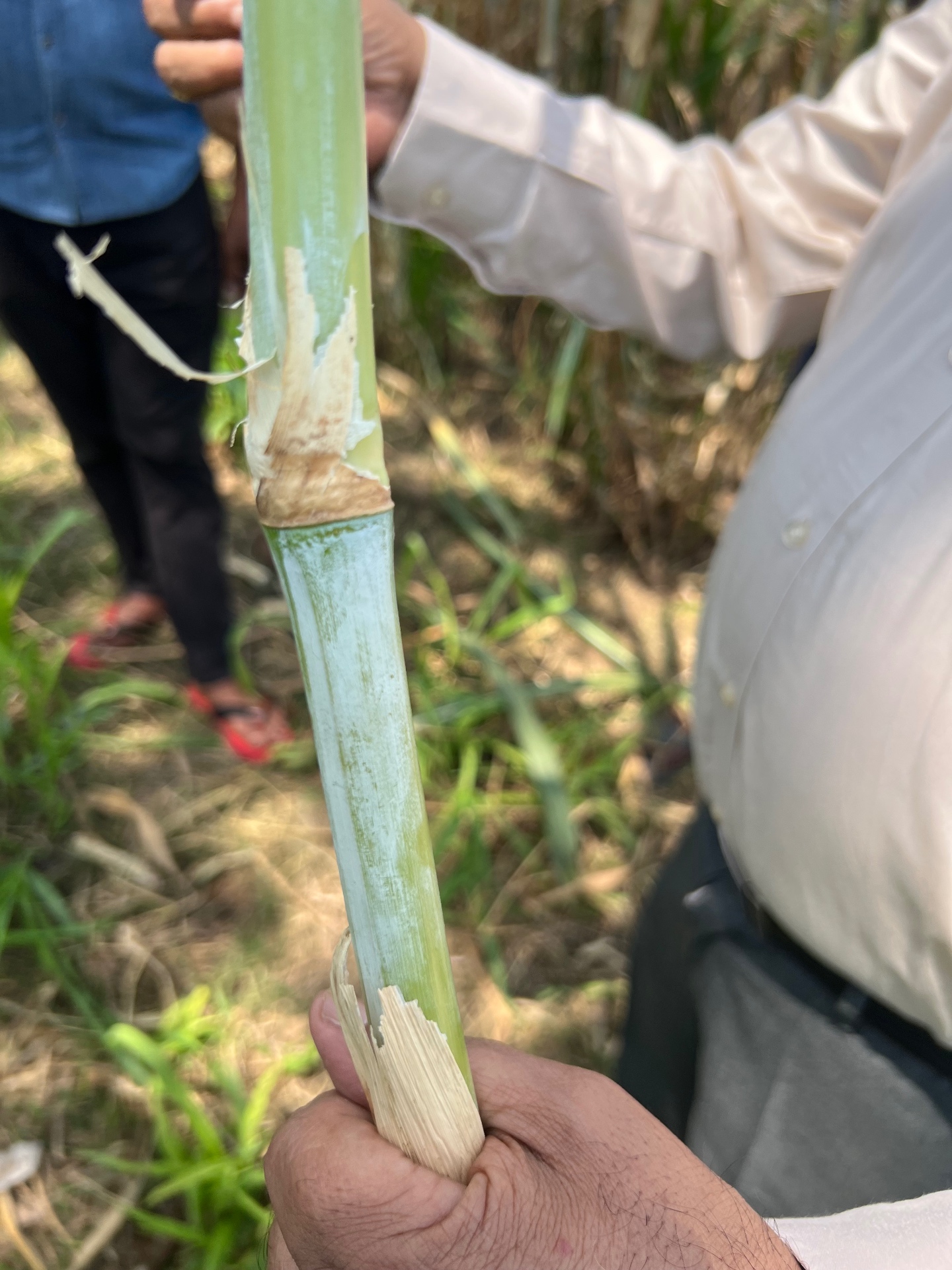
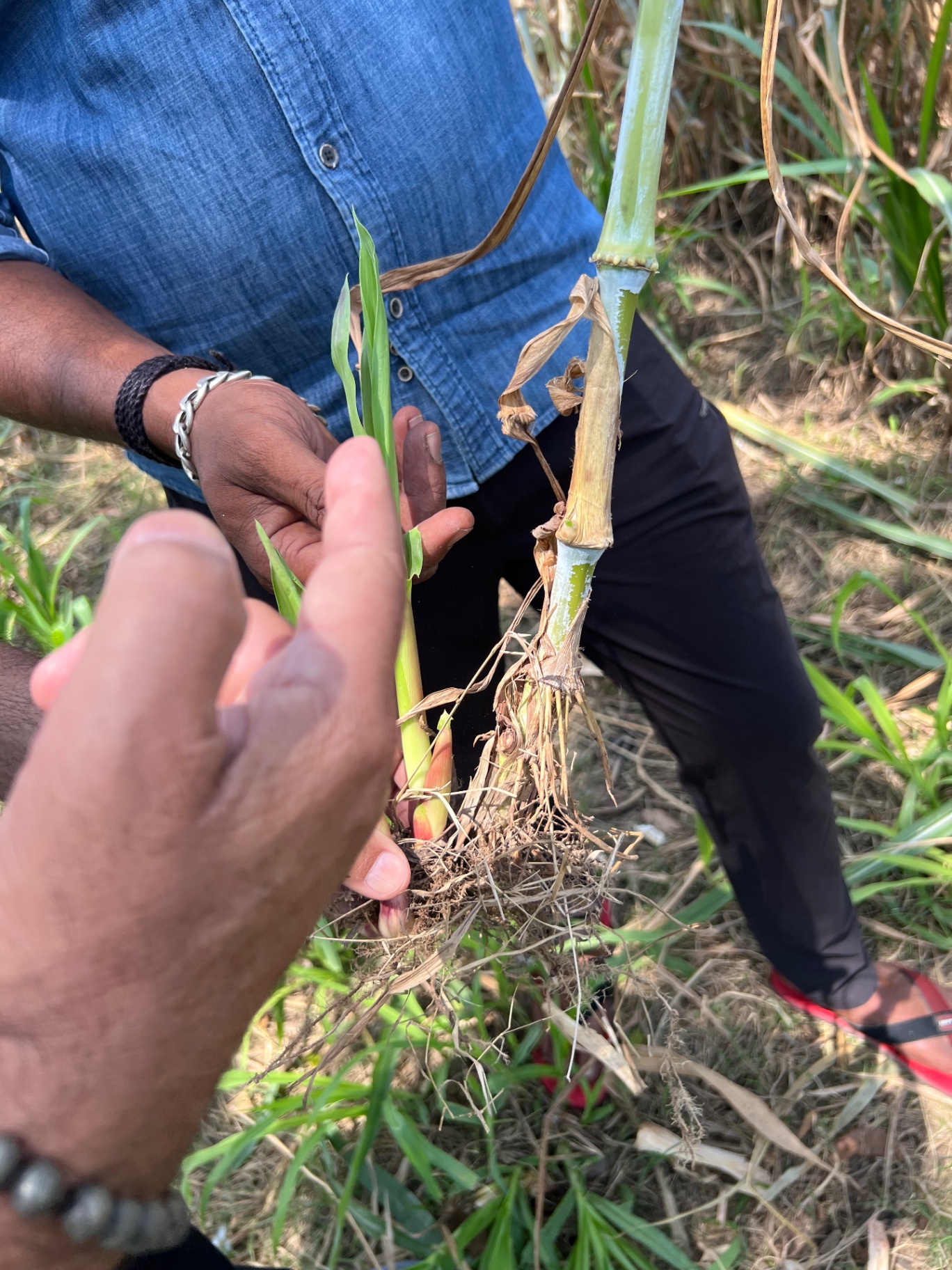
Hand holding a Napier cane with the leaf sheath peeled back to reveal a clean node
Node exposed — the leaf sheath peeled back reveals a viable bud at the internode, ready to sprout when planted.
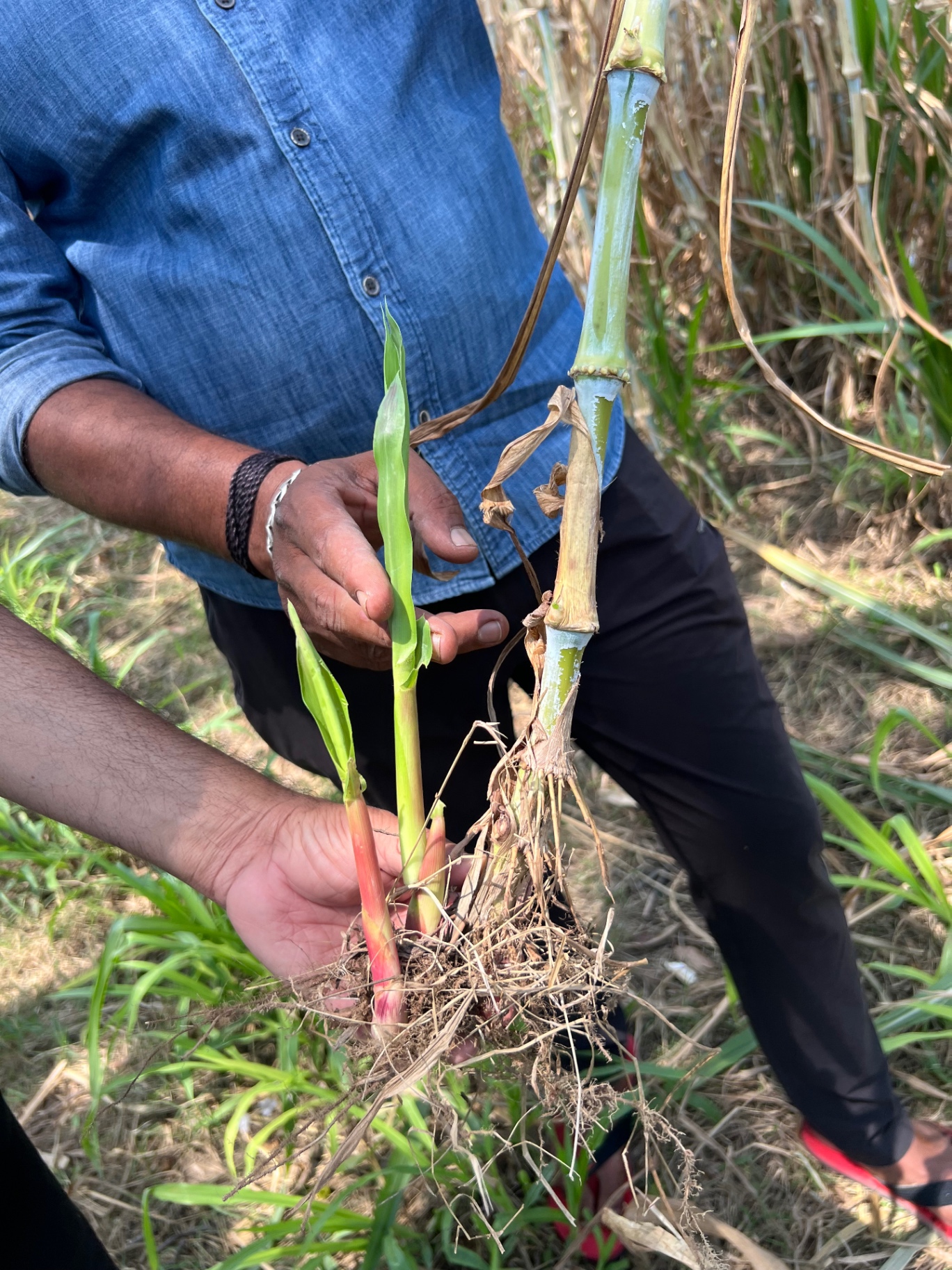
Field officer holding a rooted Napier tiller cut from the parent stool
Rooted tiller lifted from a mature stool — propagation material with intact root ball and pink-tinged crown.
Comparison between a young rooted Napier slip and a mature cane segment used for node propagation
Two propagation routes side-by-side — rooted slip (left) and mature cane segment (right), both viable planting material for cluster expansion.
10 M ha
National Napier target by 2035
15–25
Viable nodes per mature cane
2 incomes
Biomass + planting material per hectare
Seeing is believing

Knowing and seeking is dharma.

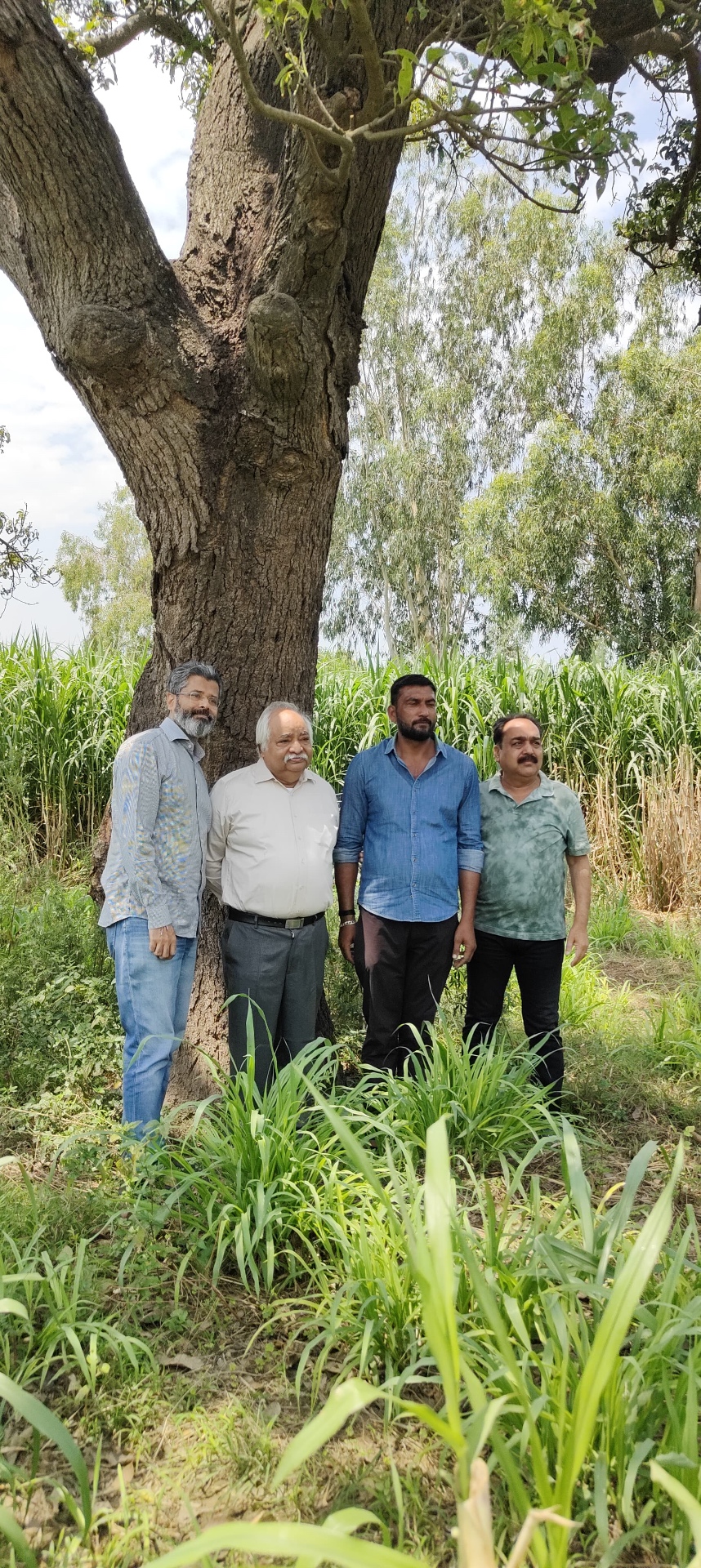
Meet Mr. Amar — a young, profound nationalist and devout believer in energy crops. On his fields, conviction takes a tangible form: dense Napier canopies that tower above a man, ratoon stubble bursting back to life within days of harvest, and ancient shade trees standing guard over a circular bio-economy. Farmers like Amar are freeing our nation from the clutches of fuel imports and geo-political wars — one hectare, one cut, one cubic-metre of CBG at a time.
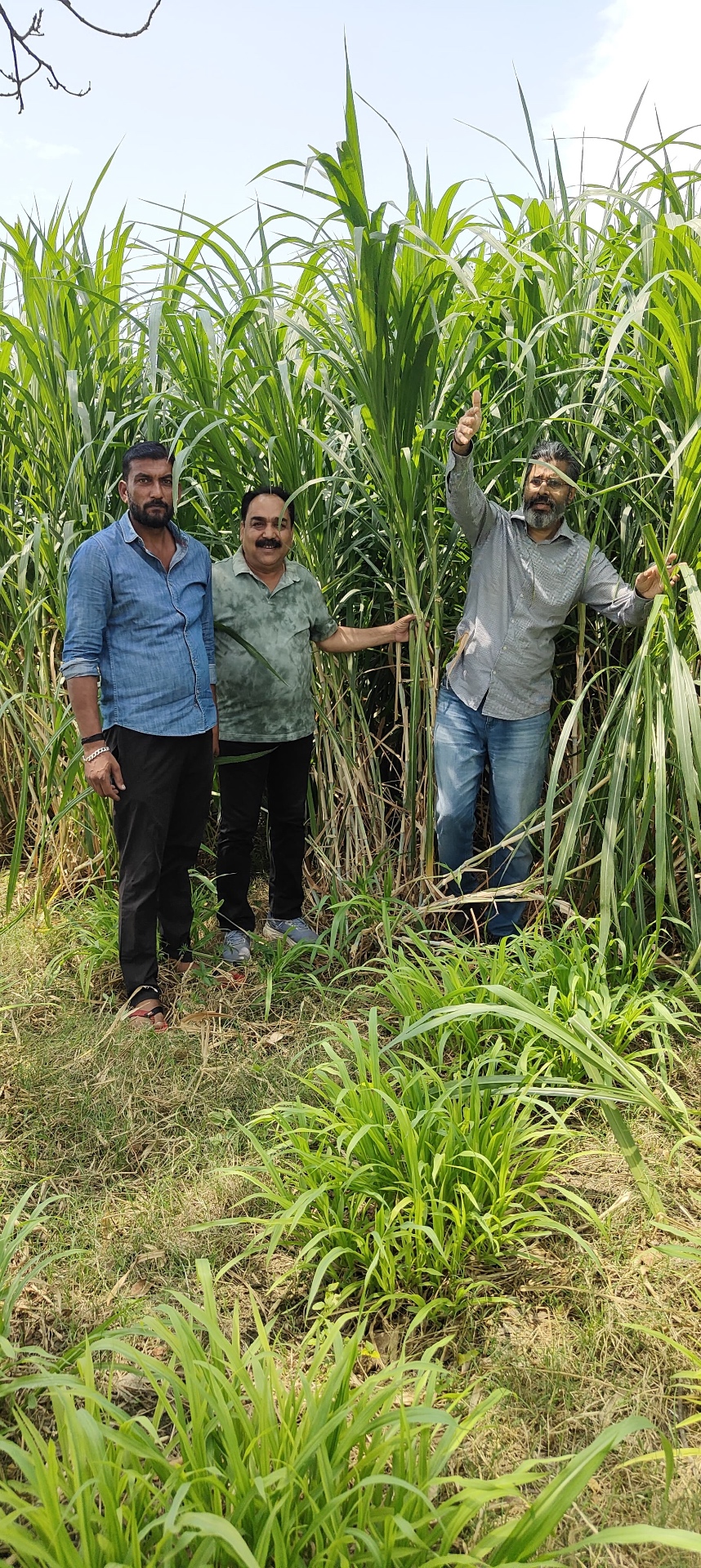
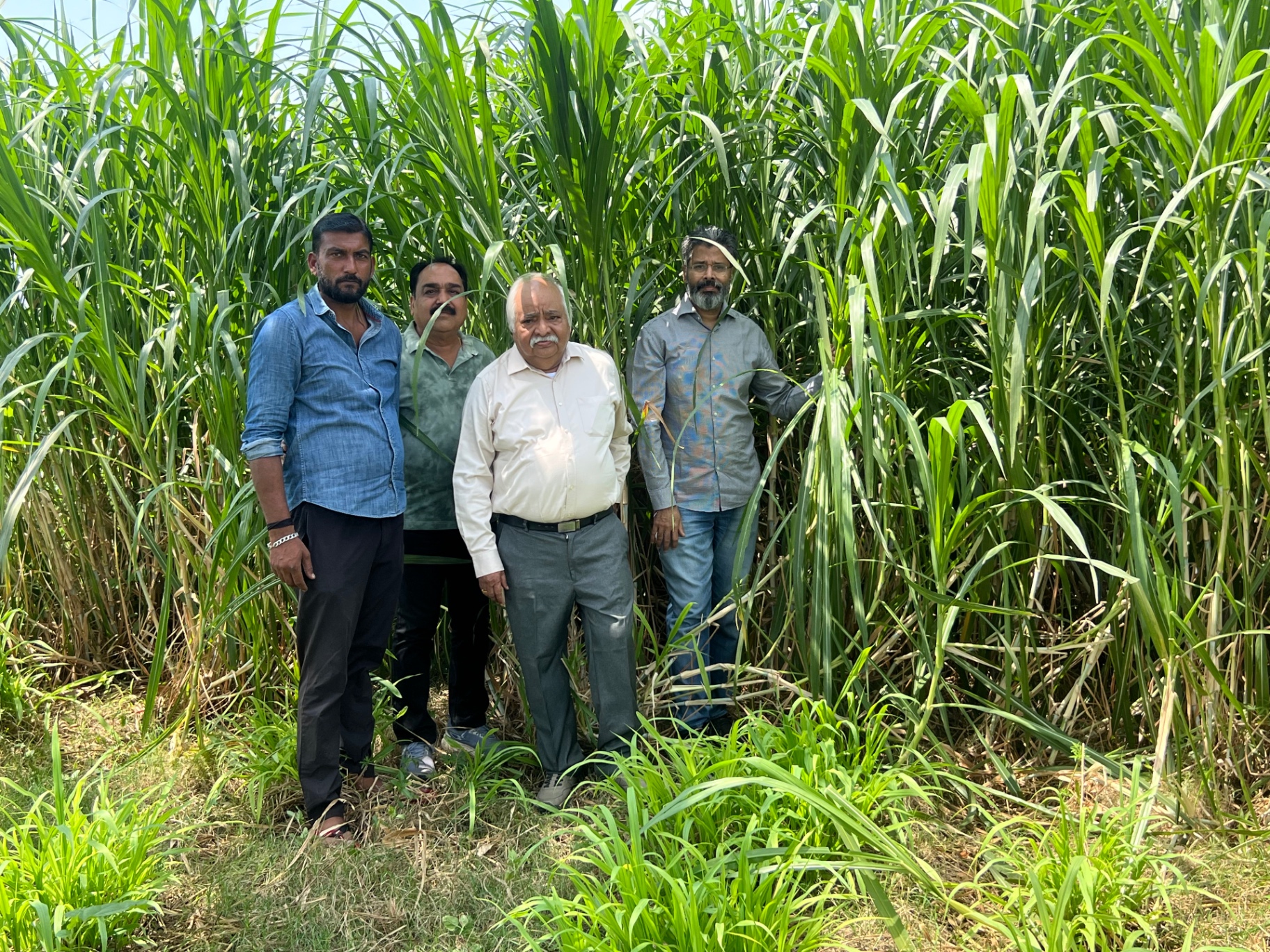
Mr. Amar with team standing beside towering Hybrid Bajra-Napier canopy on his farm
Mr. Amar (left) with the field team beside a mature Napier stand — canes overtopping every person by metres. Living proof of what well-managed energy crops can deliver.
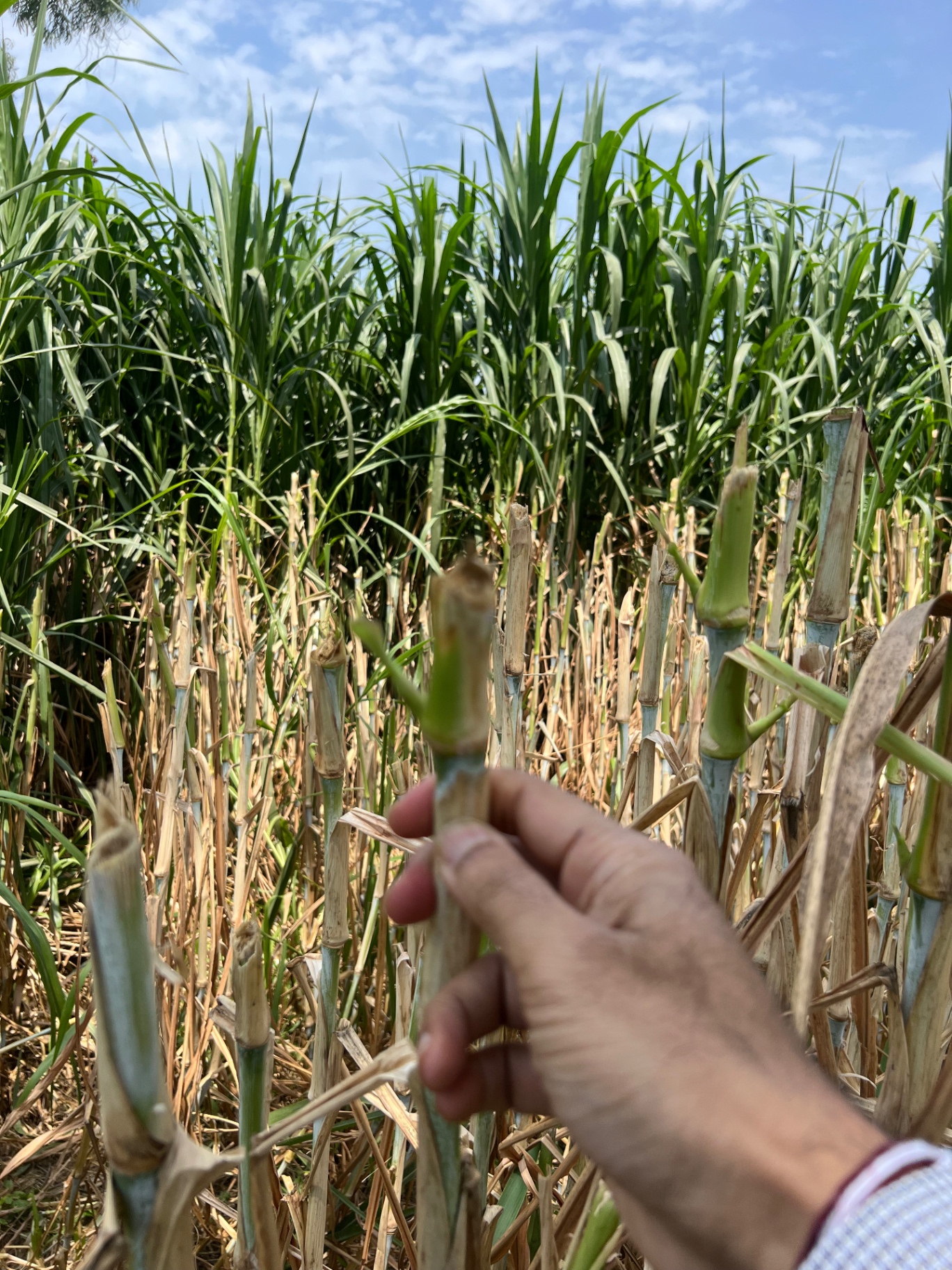
Close-up of a Napier cane held in hand showing thick green internode above ratoon stubble
Post-harvest ratoon — thick, juicy green internodes regenerating from the stool within days. Every cane is feedstock; every stool is a 5–7 year annuity.
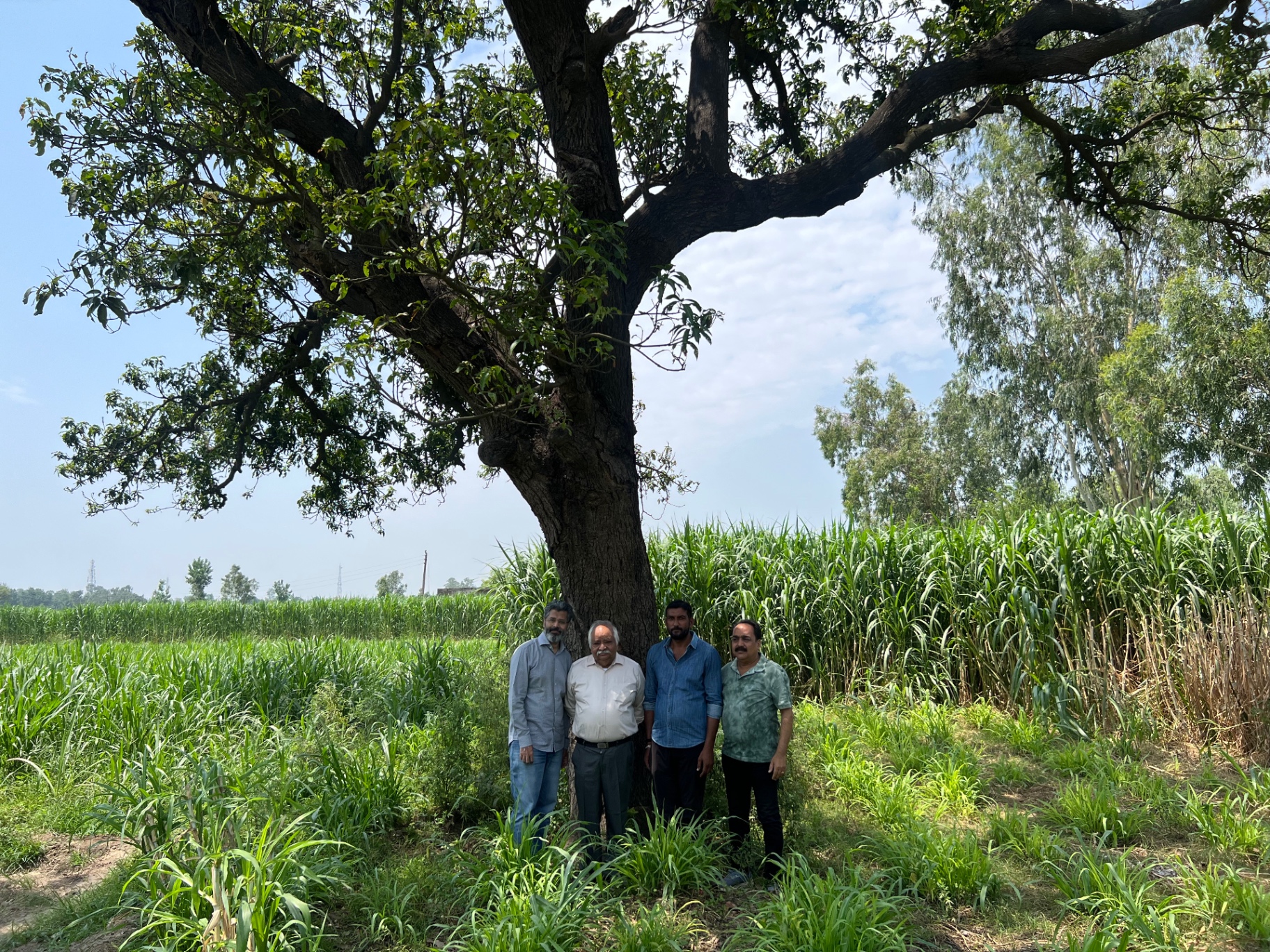
Mr. Amar and team beneath a heritage shade tree flanked by Napier energy crop fields
A heritage shade tree anchors Amar's biorefinery plot — biophilic farming in practice: trees, soil, perennial grasses and farmer livelihoods woven into one resilient landscape.
Field team gathered under a large tree with Napier fields in the background
Knowing and seeking is dharma — the DAL team with Mr. Amar, walking the cluster, sharing agronomy and committing offtake. Farmer-first energy security, built one conversation at a time.
New-age farmers

The new-age farmers of Bharat — making Bharat great again.

From village agronomists to elder cultivators, a new generation of Indian farmers is taking ownership of the nation's energy future. Every Napier stool they plant displaces a litre of imported diesel, every ratoon cut feeds the CBG digester, and every cluster they anchor turns geo-political vulnerability into rural prosperity. This is Atmanirbhar Bharat at the grassroot — soil, sweat and sovereignty.
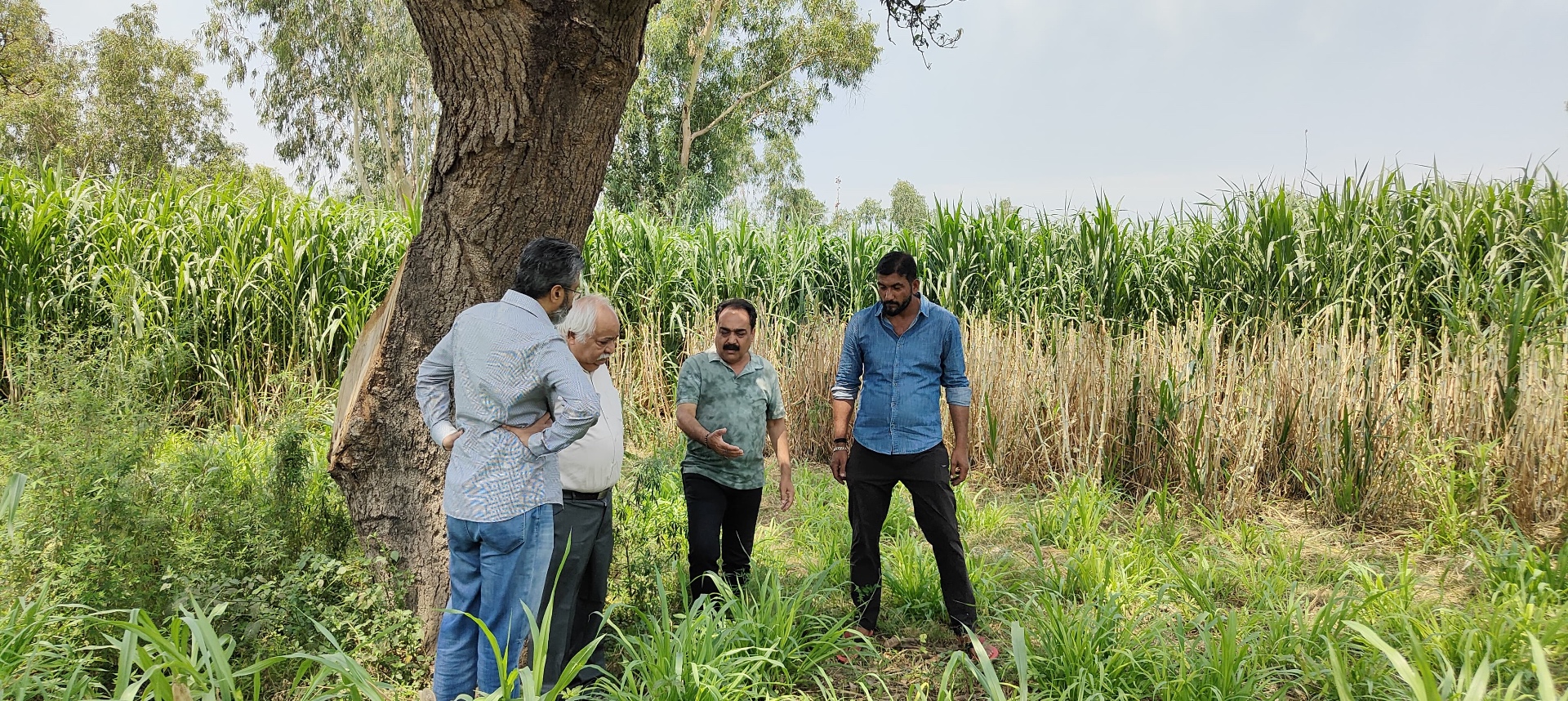
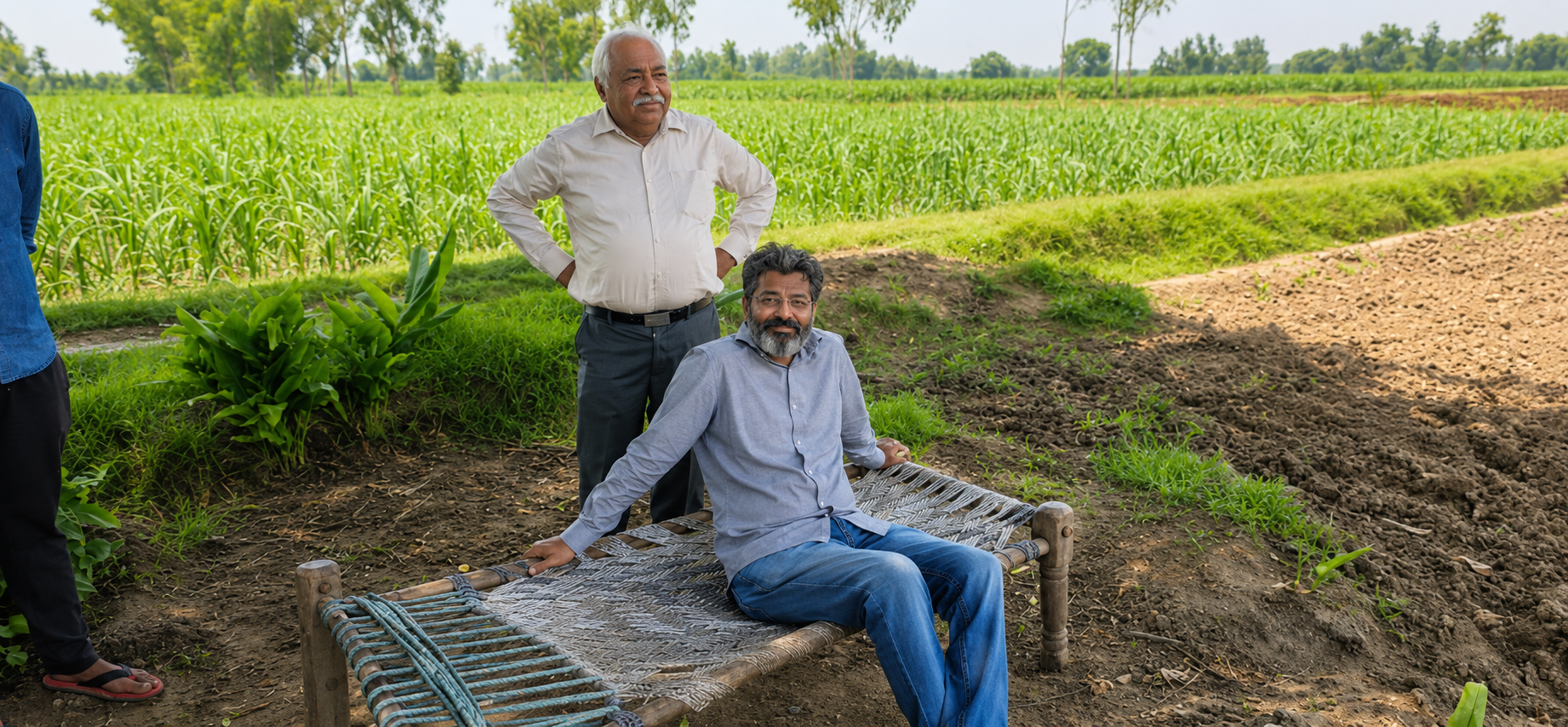
DAL field team and farmers in discussion under a heritage tree with Napier fields behind
Field consultation in session — agronomy, offtake economics and ratoon planning, debated under the shade of a heritage tree with the Napier block as the backdrop. Knowledge transfer is the real seed.
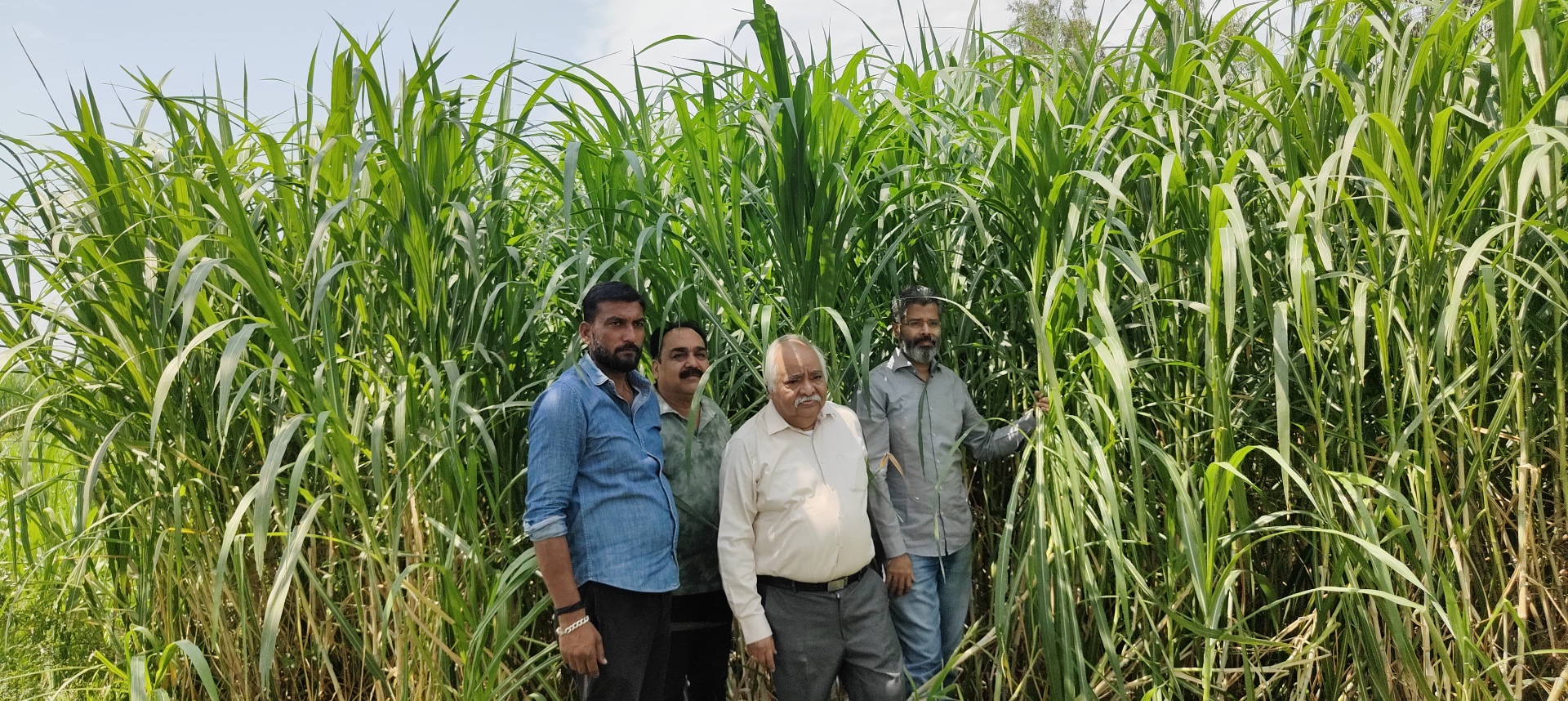
Four farmers and DAL team members standing in front of an arching Hybrid Bajra-Napier canopy
Farmers and field leaders dwarfed by an arching Hybrid Bajra-Napier canopy — proof of yield, proof of conviction. Every cane behind them is feedstock for CBG, bio-CO₂ and bio-fertiliser.
Team of farmers and DAL leadership in front of a dense, head-high Napier stand
A new generation of Bharat's farmers — proud, organised and biorefinery-ready. The FPO/FPC model turns isolated smallholders into a coordinated feedstock force.
Mr. YV, Director Agropolis, standing within a towering mature Napier energy crop stand
Wisdom meets towering biomass — Mr. YV, Director Agropolis, within a mature Napier stand reaching well over 12 ft. Decades of agrarian experience now powering the bio-energy transition.

Agronomy disclaimer. All spacing, ripping, nursery and harvest recommendations on this page are indicative guidance based on Dhakshhin Agropolis field experience. Soils, rainfall, clones, irrigation and end-use vary by cluster — every recommendation must be validated locally with a qualified agronomist, a soil and water test, and a small trial plot before scale-up. DAL accepts no liability for outcomes from uncalibrated adoption.

Agronomy by objective

The science of agronomy starts with the objective — not imitation.

Plan your Napier system your own way. Agronomy is not copy-paste. If the objective is lignin, the nursery design, spacing, ripping depth, crown development strategy and harvest window will be different from a fodder-first or biogas-only plantation.

Soils, objectives, end products and business model all shape the agronomist's decisions: whether the field should favour root mass or leafy biomass, whether the nursery must prioritise strong nodes, and whether the crop should be cut for rapid turnover or managed for a long-term structural carbon plan.

Spacing, ripping and harvesting times must therefore be engineered backward from the end use — CBG, lignin, carbon materials, nursery multiplication or mixed biorefinery outputs — so the plantation is designed for the product, the soil and the years ahead.

A modern nursery is non-negotiable for large-scale farming and yield optimisation. Every 1% loss in germination and every stressed node that grows slowly compounds into a heavy economic loss — wasted irrigation, wasted weeding, missed harvest windows and lower biomass per acre. Download the checklist for each pillar below and hand it to your nursery in-charge.

Soils

Lignin yield rises on well-drained, deep, medium-textured soils where roots can chase moisture and lay down structural carbon.

Nursery
Raise rooted slips on the same soil texture as the planting site — sandy-loam mother beds for sandy fields, heavier beds for clay clusters — so transplants don't stall on transfer.
Spacing & ripping
Wider 90 × 60 cm spacing on light soils to push root mass; tighten to 75 × 50 cm on heavier soils where canopy closure drives lignin per acre.
Harvest timing
First cut at 120 days once the rind hardens; on poor soils delay to 140–150 days so cell walls fully lignify before the chopper enters.

Objectives — Lignin first

Targeting 2.0–2.5 dry t/acre/year of lignin for hard carbon, carbon fibre, bio-polymers and adhesives.

Nursery
Select thick-rind, high-internode mother clones (BN-Hybrid, CO-5, Super Napier); propagate from 2–3 node mature cane segments, not soft tips, for rind-heavy progeny.
Spacing & ripping
90 × 60 cm with paired-row layout — full sun on every stalk thickens secondary cell walls; rip subsoil to 45 cm pre-planting to anchor crown carbon.
Harvest timing
Cut at 120–140 days when stalks are blue-green and woody — earlier cuts strip yield as moisture, later cuts lose ratoon vigour.

End products — CBG vs Carbon vs Stock

CBG wants tender cellulose/hemicellulose; carbon materials want mature lignin; planting stock wants viable nodes — three different harvest windows.

Nursery
Run parallel nurseries: soft-tip slips for CBG plots (fast turnover), node-cuttings from 90-day cane for new plantings, mature-cane mother blocks reserved for lignin extraction.
Spacing & ripping
CBG plots 75 × 50 cm for max tonnage; lignin plots 90 × 60 cm for stalk diameter; nursery multiplication plots 60 × 60 cm to maximise node count per acre.
Harvest timing
CBG: 75–90 days. Lignin: 120–140 days. Nursery nodes: 90–120 days while internodes are still viable but rind has set.

Business model — Long-term planning

A 7–10 year lignin offtake contract pays back the ripping, drip and crown investment; short-term fodder sales do not.

Nursery
Reserve 10–15% of the cluster as DAL-franchised nursery blocks — second income stream of ₹3–5 lakh/acre/year from node sales to the next FPO cluster.
Spacing & ripping
Lock spacing to the 10-year plan, not the first ratoon — wider rows accept inter-row legumes in years 1–2 and mechanised harvesters in years 3–7.
Harvest timing
Plan a 4-cut/year rhythm for 5–7 years; schedule a deep ripping + crown rejuvenation in year 4 to extend plantation life to year 10.

Planning reference

Posters for nursery, spacing and long-term plantation planning

1 / 4

Lignin-first planning — objective-led spacing, root architecture and harvest timing.
Nursery and planting logic — node choice, planting direction and root-first establishment.
Node science — every tiller, root and crown begins in the node.
Crown management — strategic topping can shift the plantation toward more tillers and biomass.

Nursery economics

A profitable, modern nursery — the foundation of every biorefinery acre.

1 / 2

End-to-end nursery economics — ₹2.05 L CAPEX, ₹2.25 L OPEX, 7–11 lakh nodes/year, 60–75% EBITDA margin and a foundation-to-commercial nursery pyramid scaling to 10 lakh acres.
Healthy nodes today, high yield tomorrow — gunny bag, ventilated carton and double-layer packing with coir dust, sugarcane bagasse, cocopeat or paddy straw moisture media.

Lignin · Napier · Atmanirbhar Bharat

Lignin — the bio-polymer behind every advanced material.

1 / 4

From nature, for nation, for the future — Napier leads the top 10 lignin-per-acre crops at 2.0–2.5 dry tons/acre/year, feeding hard carbon anodes, carbon fibre, aromatic chemicals, bio-based polymers, composites and adhesives.
From Napier to nation's advancement — cultivation → biorefinery → lignin → hard carbon → battery anodes → EVs & energy storage, aligned with NCMM, ACC Battery Ecosystem and National Advanced Materials Programs.
2× lignin, 2× production from the same land — high-value lignin for advanced materials plus CBG and FOM for clean energy and soil health, driving farmer income and Make-in-India advanced manufacturing.
Healthy nodes today, high yield tomorrow — gunny bag, ventilated carton and double-layer packing options with coir dust, sugarcane bagasse, cocopeat or paddy straw as moisture media for >90% survival.

Ready to collaborate?

Partner with us