
National & Global Imperatives
USD 130 billion leaves India every year. Our farmers can bring it home.
A growing evidence set behind the Agropolis mission — the energy import bill, the hidden subsidy burden, the cropping transition reality, and the CBG, silage, and integrated 4F opportunity that can turn Indian farms into the country's energy backbone.
Discussion posters
National scale evidence, technical framing, and system design.
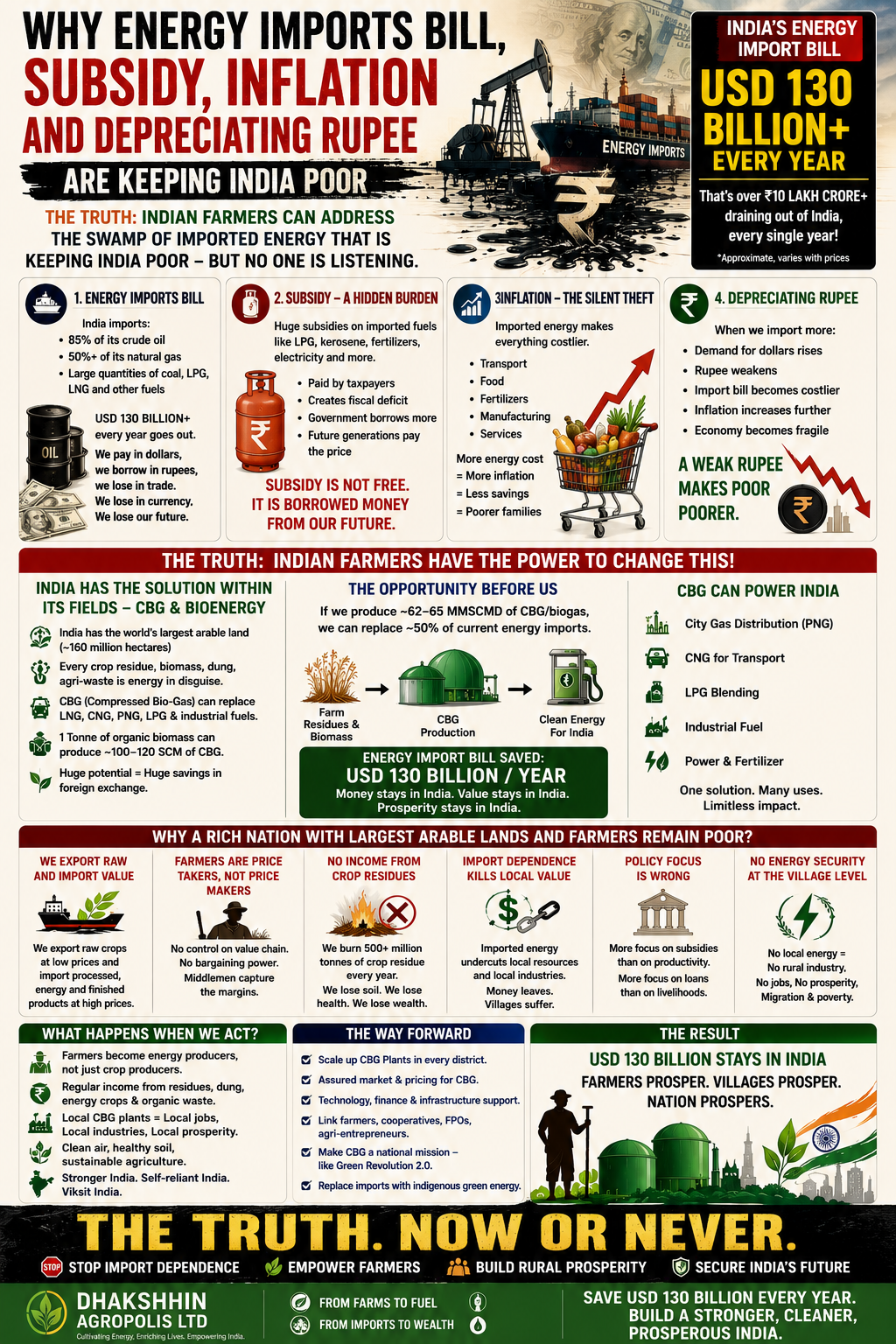
Why energy imports, subsidy, inflation & a depreciating rupee are keeping India poor. India's USD 130 billion+ annual energy import bill, hidden fuel subsidies, the silent theft of inflation, and a weakening rupee form one interconnected drain on the economy. CBG and bioenergy from Indian farms are the structural answer.
Source: Dhakshhin Agropolis Ltd — National & Global Imperatives series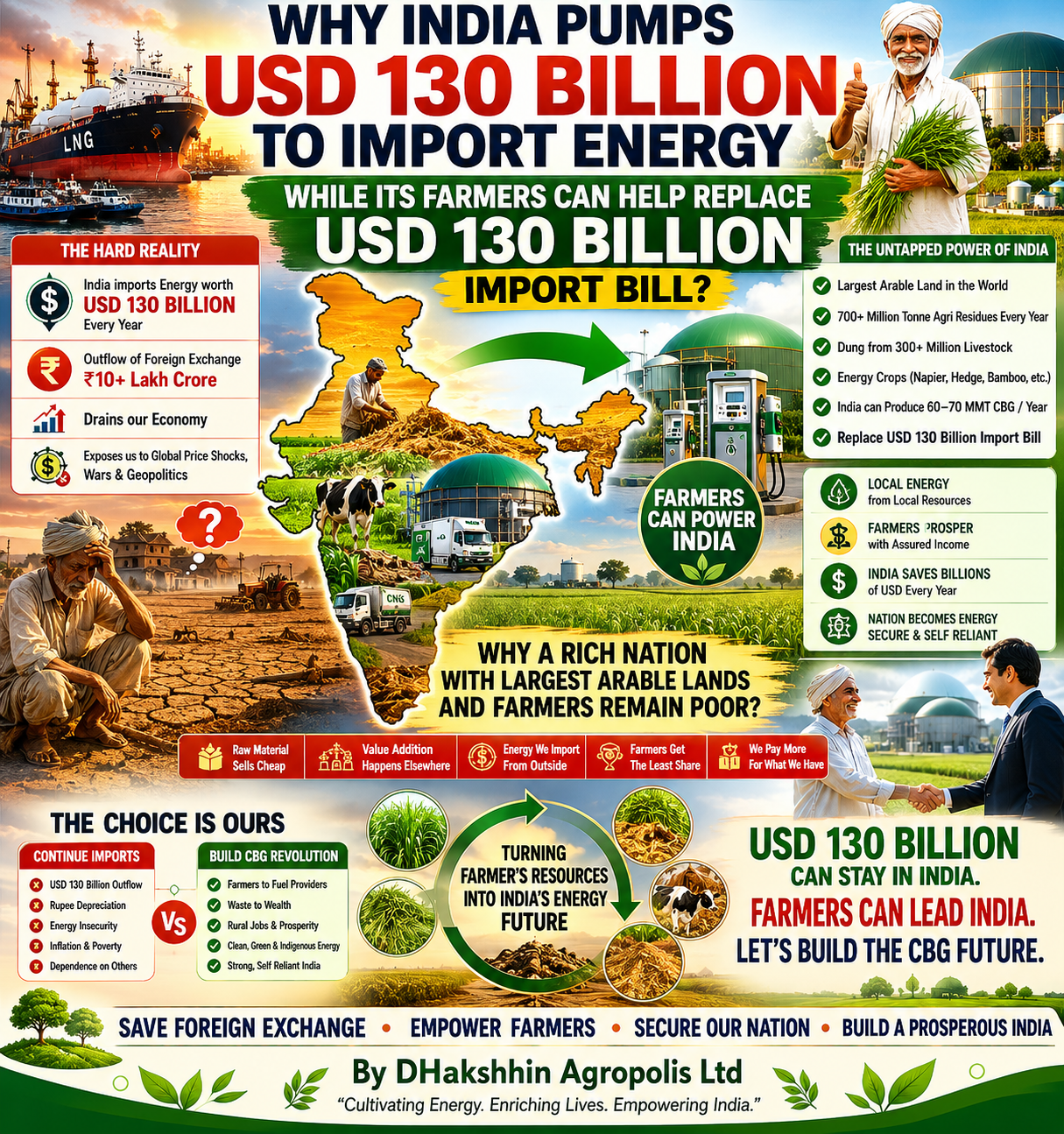
Why India pumps USD 130 billion to import energy — when farmers can replace it. 700+ million tonnes of agri-residues, dung from 300+ million livestock, and energy crops give India the capacity to produce 60–70 MMT of CBG per year and replace the entire USD 130 billion import bill.
Source: Dhakshhin Agropolis Ltd — National & Global Imperatives series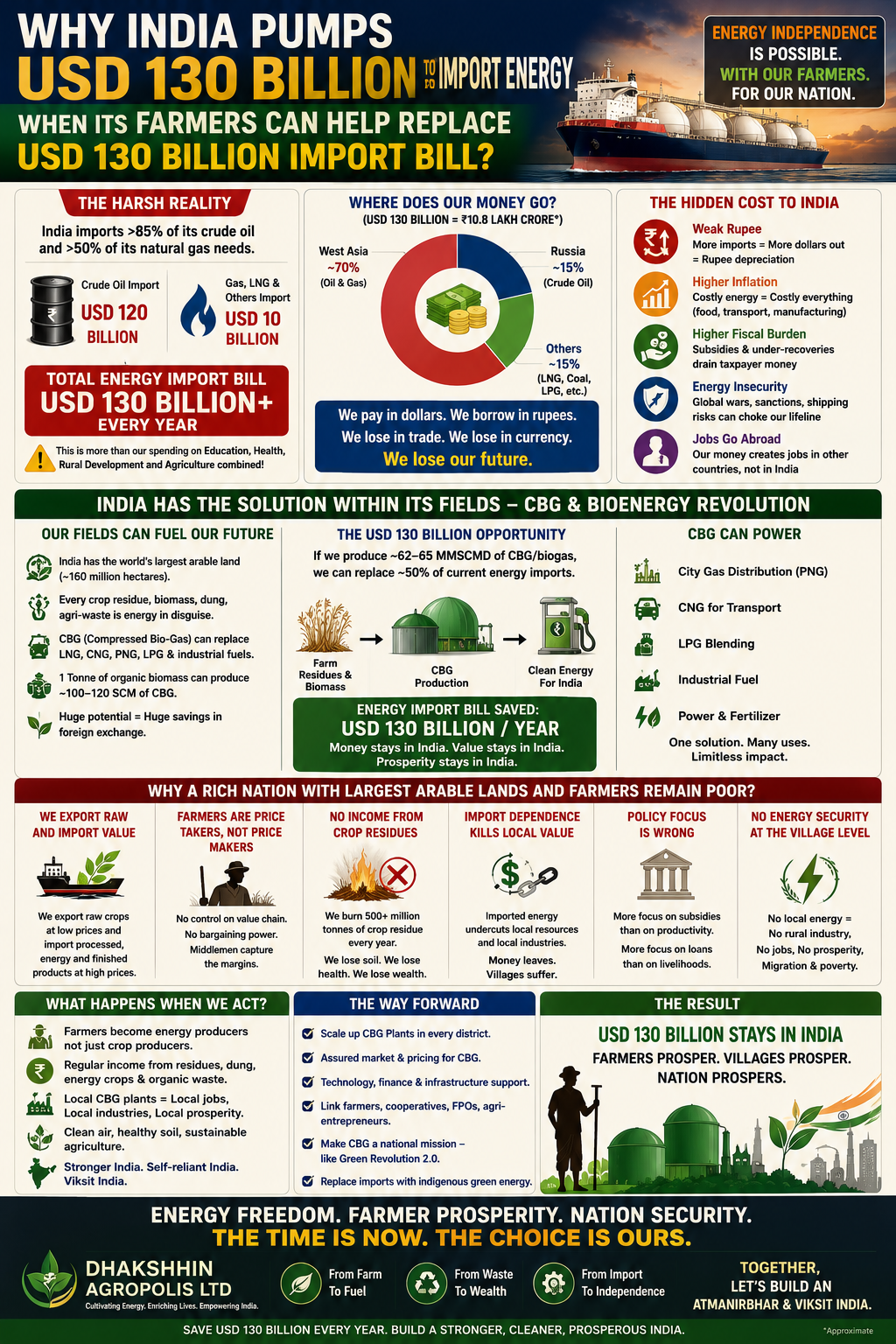
USD 130 billion — the harsh reality and the CBG opportunity. India imports >85% of its crude oil and >50% of its natural gas, with ~70% flowing to West Asia. Producing 62–65 MMSCMD of CBG/biogas can replace ~50% of current energy imports.
Source: Dhakshhin Agropolis Ltd — National & Global Imperatives series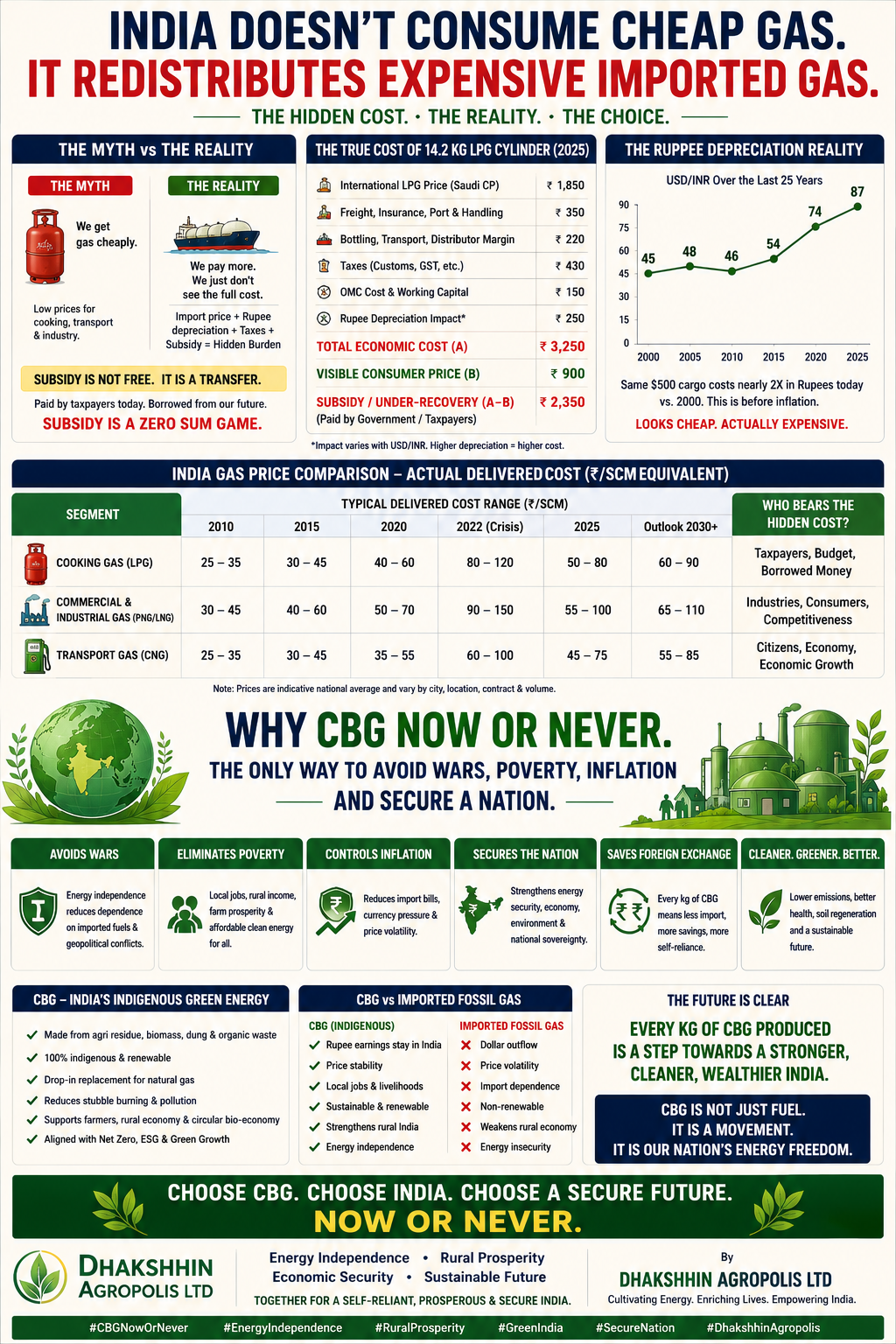
India doesn't consume cheap gas — it redistributes expensive imported gas. The true delivered cost of a 14.2 kg LPG cylinder is ₹3,250 vs the visible ₹900 — the ₹2,350 gap is a subsidy paid by taxpayers and borrowed from the future. CBG is the structural way out.
Source: Dhakshhin Agropolis Ltd — National & Global Imperatives series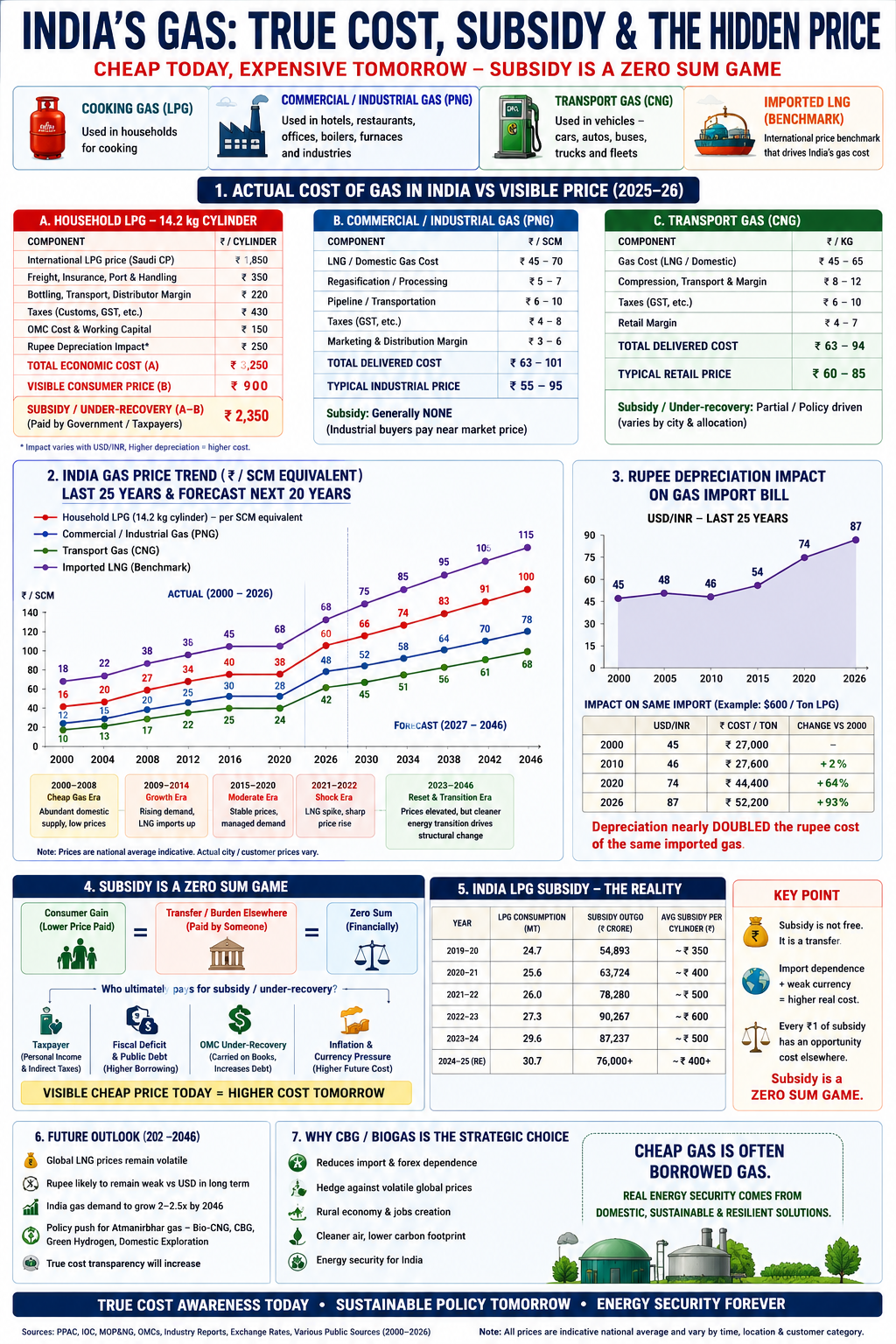
India's gas: true cost, subsidy & the hidden price. A component-by-component breakdown of LPG, PNG and CNG pricing, the LPG subsidy outgo (₹54,000–90,000 crore/year), and the rupee depreciation impact that has nearly doubled the rupee cost of the same imported gas since 2000.
Source: Dhakshhin Agropolis Ltd — National & Global Imperatives series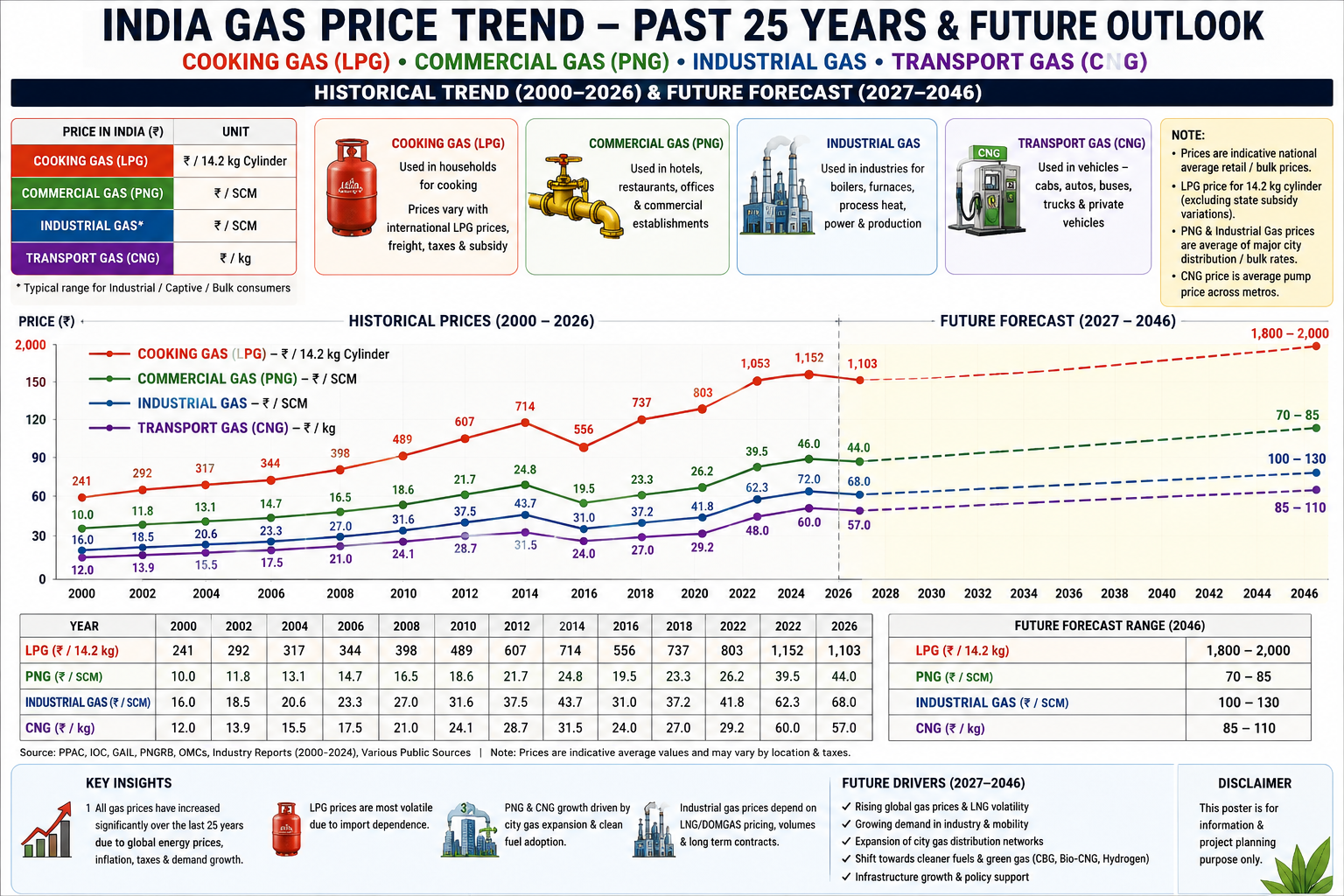
India gas price trend — past 25 years & future outlook to 2046. Historical (2000–2026) and forecast (2027–2046) price trajectories for LPG, PNG, Industrial Gas and CNG — all curves point up. The shift to CBG, Bio-CNG and green hydrogen is the structural hedge.
Source: Dhakshhin Agropolis Ltd — National & Global Imperatives series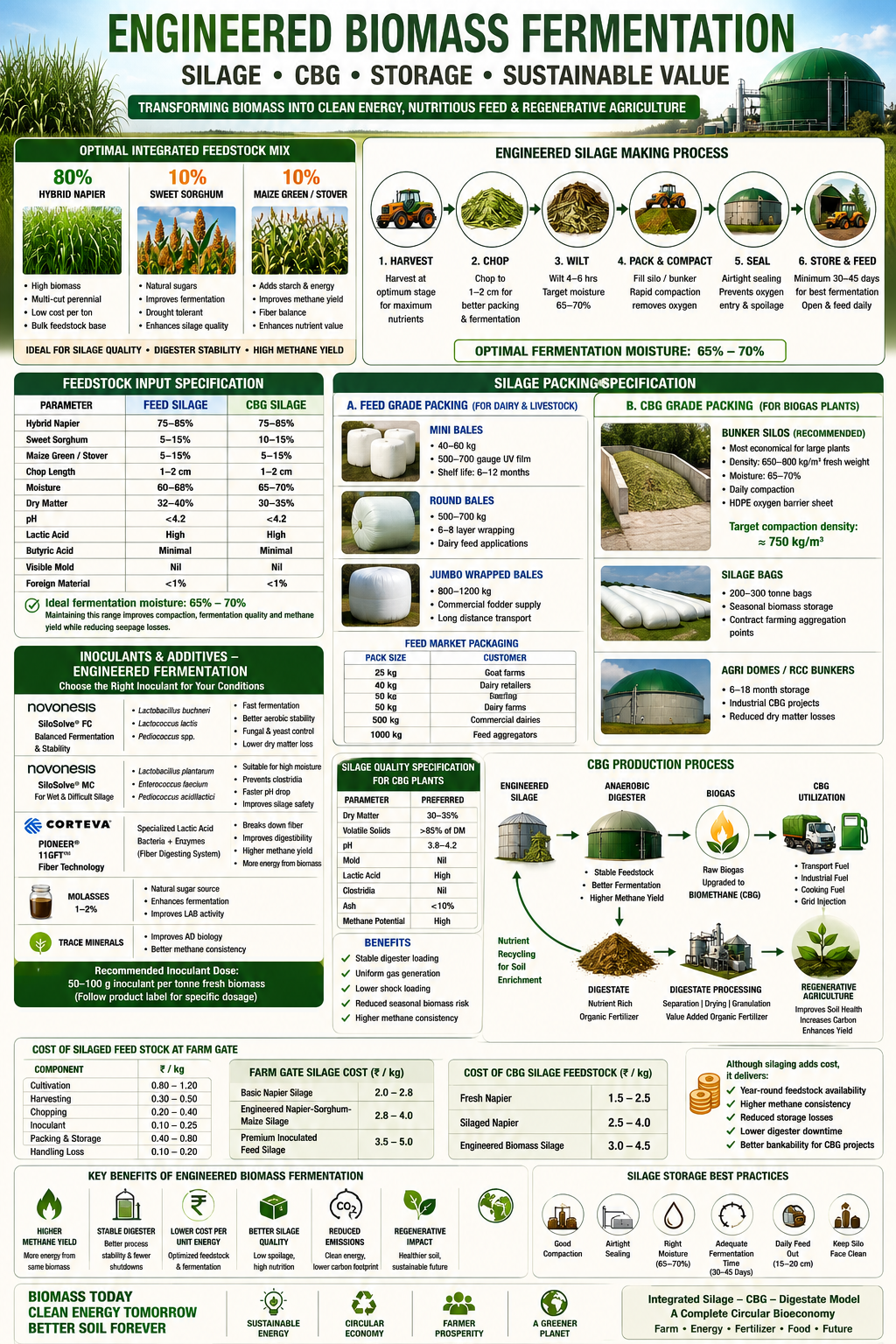
Engineered biomass fermentation — silage, CBG, storage & sustainable value. A technical systems poster on integrated feedstock design: hybrid Napier, sweet sorghum and maize/stover; silage moisture, inoculants, packaging choices, digester input quality, and regenerative use of digestate.
Source: Dhakshhin Agropolis Ltd — National & Global Imperatives series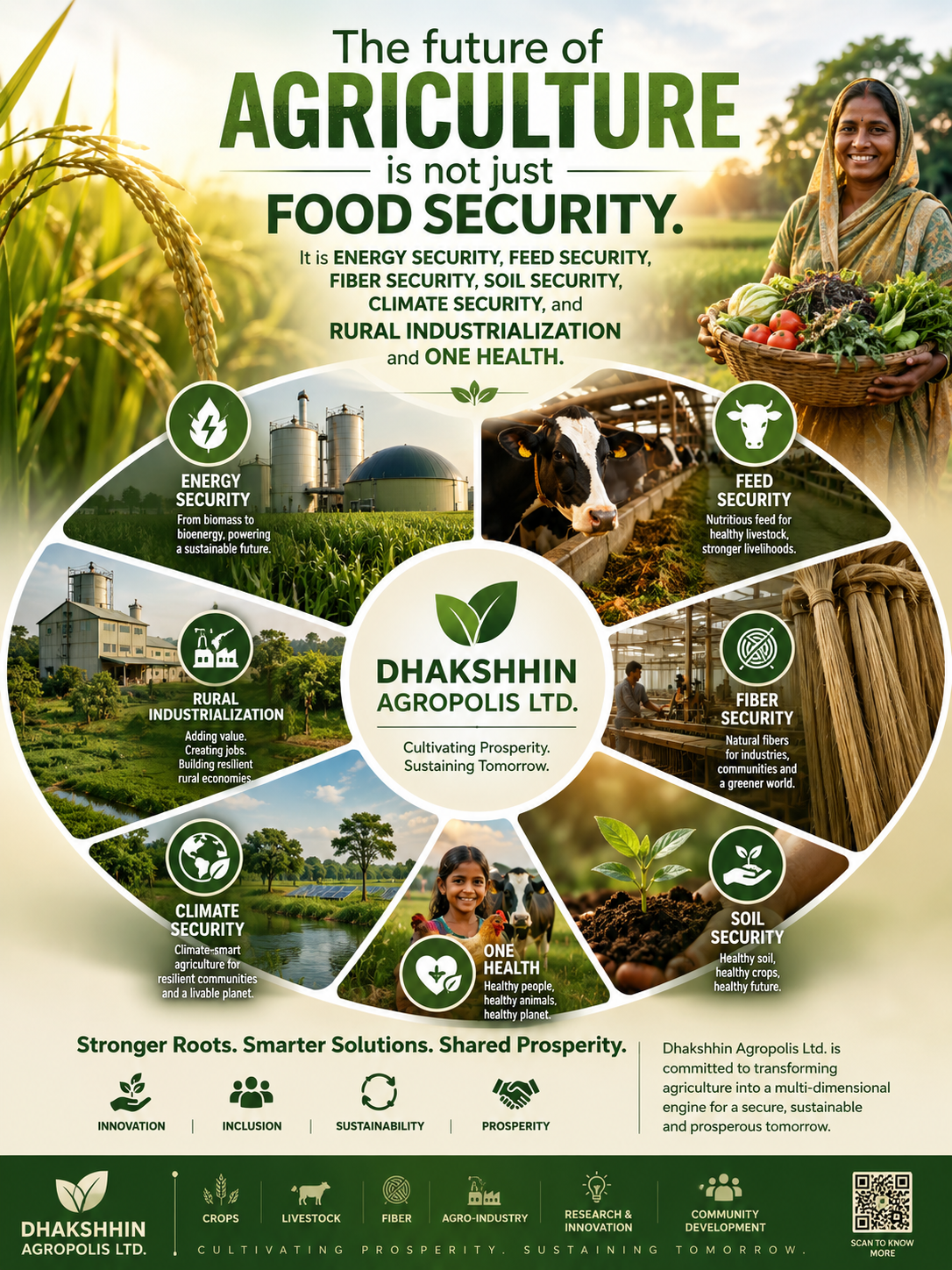
The future of agriculture is not just food security. This visual frames agriculture as a national systems agenda — not only food, but also energy, feed, fiber, soil, climate resilience, rural industrialization, and One Health. It directly supports the imperative for integrated 4F models.
Source: Dhakshhin Agropolis Ltd — National & Global Imperatives seriesSupporting press signals
Why the cropping model itself is under pressure.
These press clippings support the imperative for alternative biomass, silage, and regenerative rural-industrial models that reduce dependence on water-intensive and policy-distorted cropping cycles.
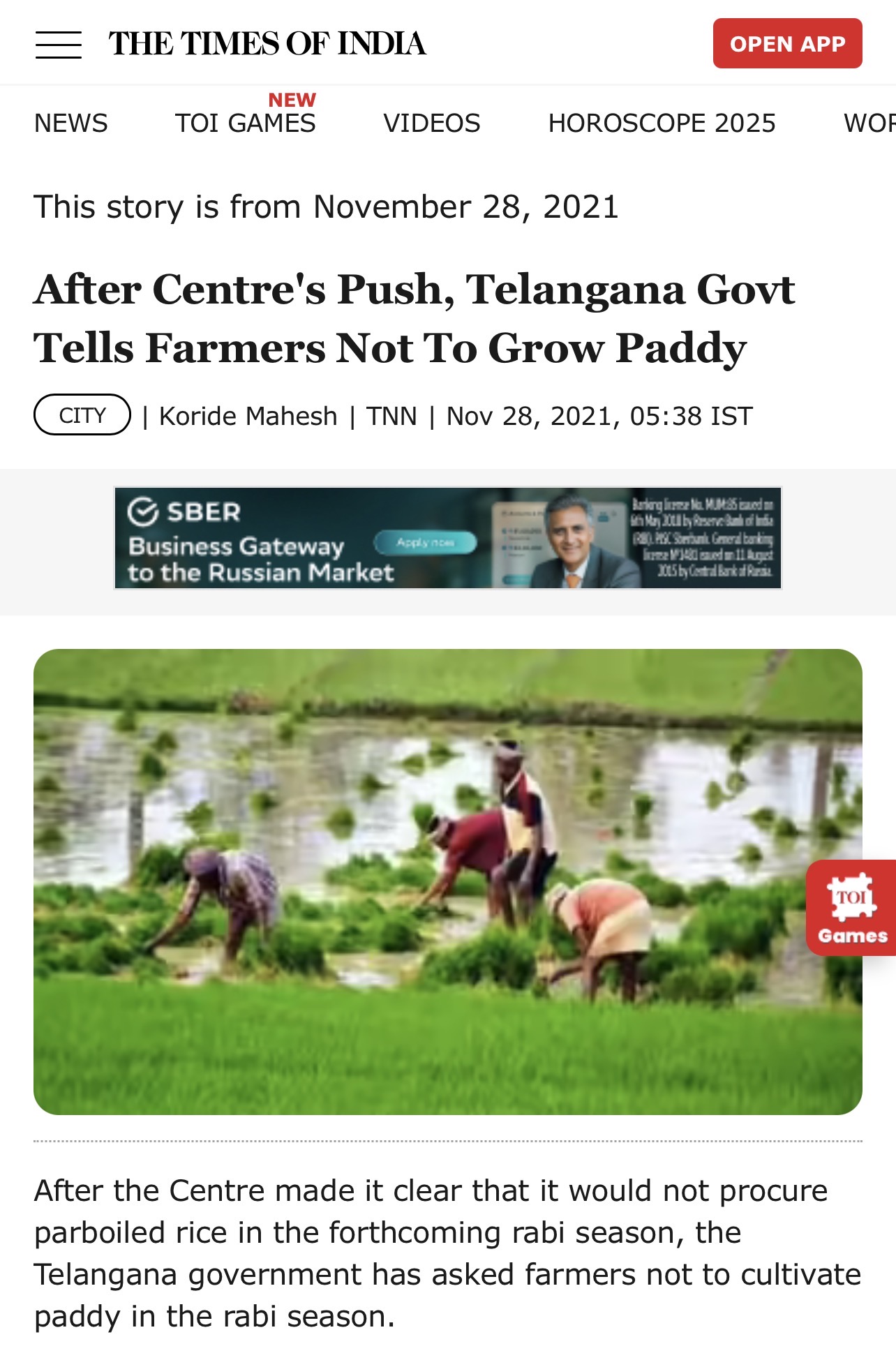
Times of India — Telangana Govt tells farmers not to grow paddy. A mainstream signal of cropping transition pressure: when water, procurement and energy realities shift, farmers need resilient alternatives. This strengthens the case for biomass crops, silage systems, and diversified rural value chains.
Source: Dhakshhin Agropolis Ltd — National & Global Imperatives series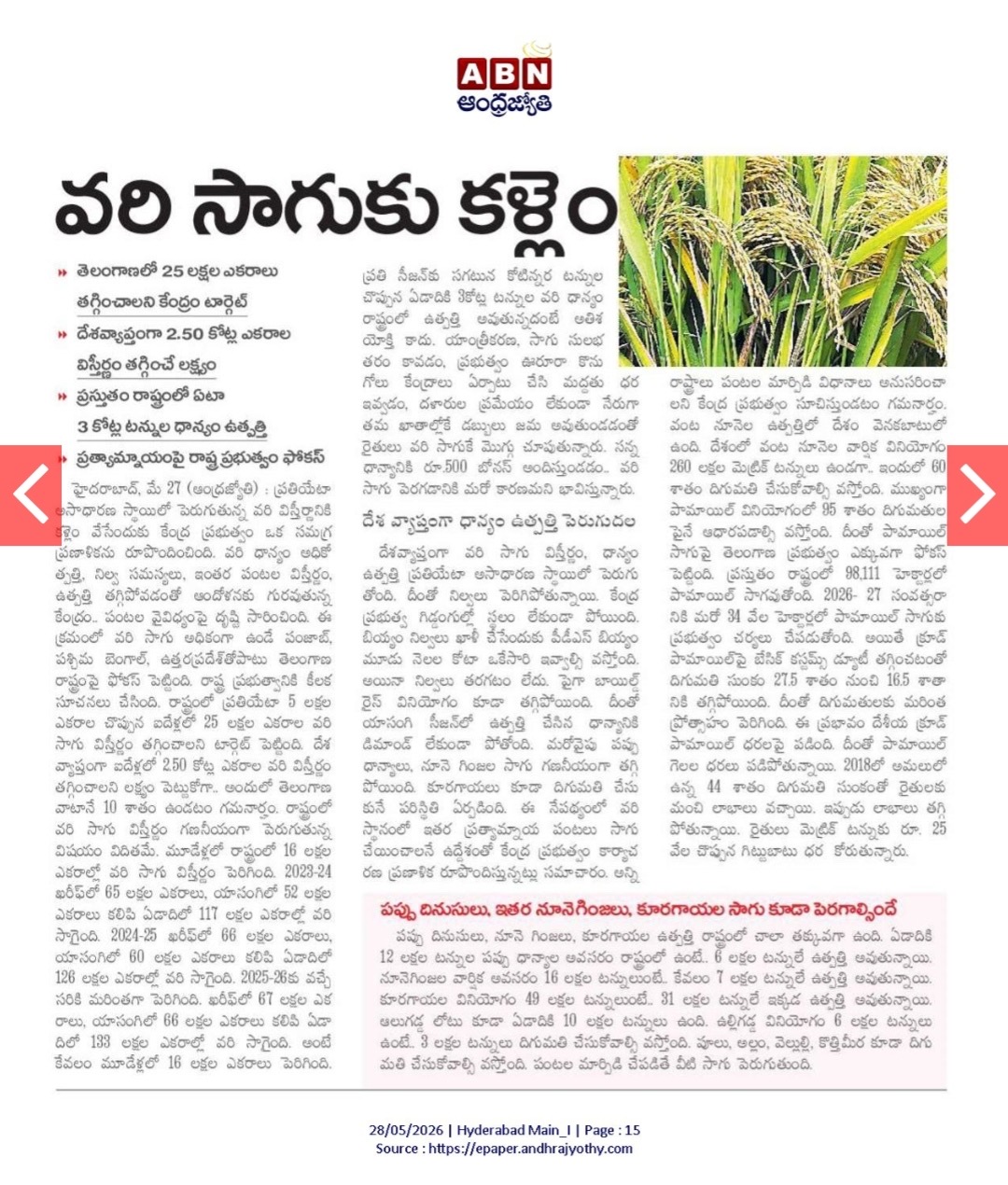
ABN Andhra Jyothi — rice and paddy policy pressure. Regional press coverage reinforces the same structural issue: paddy-heavy systems face policy and market pressure. The national imperative is to create viable alternatives that improve farmer income, soil health, water use, and energy security together.
Source: Dhakshhin Agropolis Ltd — National & Global Imperatives series